
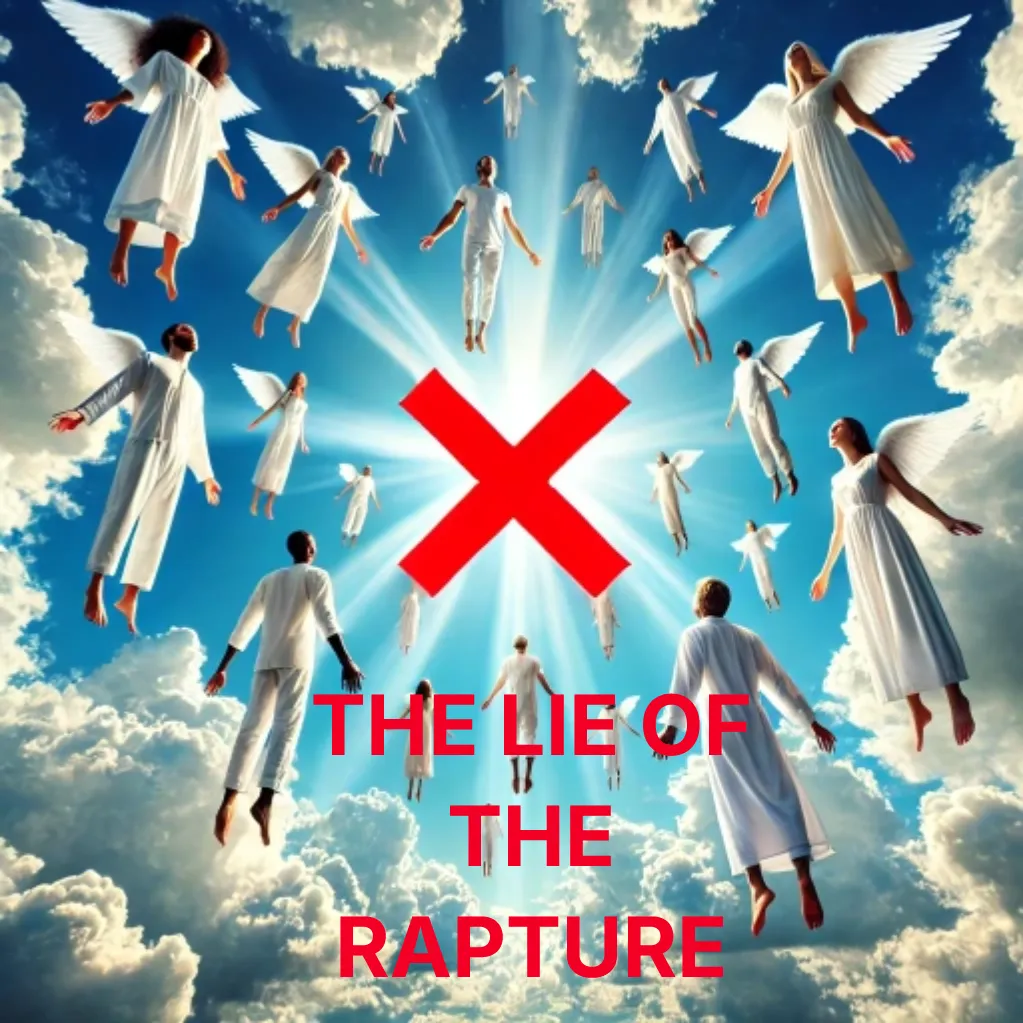
*Because of the trend I have come across and have seen some of our people fall for, I will be writing a 3 part series about the “rapture” to prove it as a nonsense misinterpretation. I will prove its actual true interpretation of it being the exact opposite of what many Christians believe about it. I am open to any questions you might have about it. Please just email me with your questions. The Fall Feasts and the Rise of Rapture Teachings The fall feast days — Yom Teruah (Feast of Trumpets), Yom Kippur (Day of Atonement), and Sukkot (Feast of Tabernacles) — are rich in prophetic symbolism. In recent years, however, many Christian teachers have linked these sacred days to the rapture. They claim that the Feast of Trumpets will usher in the “snatching away” of the righteous before the Great Tribulation. But is this interpretation rooted in Scripture? Or is it a distortion of YAH’s appointed times? From a Hebrew Israelite perspective, these teachings often reveal a misreading of the prophetic cycle, born not from Torah or the words of the prophets, but from Christian dispensationalism. In this article, we will explore what these feasts truly mean and how rapture theology twists their purpose, shifting attention from YAH’s judgment and restoration of Israel to a false escape plan for another people. (For a more indepth review of the prophetic nature of the Fall Feast please see our books, The Feast of Trumpets, Yom Teruah: An intimate understanding of its true meaning, The Holiest Day of the Year Yom Kippur: Preparing for the King’s Return, Yom Kippur The Day of Atonement: A Goat Named Azazel, Millennium & Kingdom Reign SUKKOT: Feast of Booths/Feast of Tabernacles, The 8th Day Shemini Atzeret: The Last Great Day) The Origin of the Rapture Fall Feast Connection The link between the rapture and the fall feast days, especially the Feast of Trumpets, is a recent phenomenon. In the 1800s, John Nelson Darby, followed by C.I. Scofield, developed the idea of a pre-tribulation rapture. Later, modern evangelical prophecy teachers began connecting this rapture to the blowing of the shofar during Yom Teruah. Verses like 1 Thessalonians 4:16 were used out of context: “For the Lord himself shall descend from heaven with a shout, with the voice of the archangel, and with the trump of God: and the dead in Christ shall rise first.”— 1 Thessalonians 4:16 (KJV) Because of the mention of the trumpet, these teachers assumed Paul was referencing the Feast of Trumpets, and they concluded that this must be the time of the rapture. But Paul was referencing the Last Trump, not the Yom Teruah shofar blast. Furthermore, his audience understood resurrection and gathering as part of YAH’s earthly plan for Israel — not a heavenly evacuation. This interpretation divorces Paul from the Tanakh (Old Testament) and strips the feast days of their covenantal meaning for YAH’s people. (If you want to know the origins of the purposeful removal of the Israelites from the bible please see our book, Spiritual Israel the Butchering of YAHUAH’s Word: Lies from the Catholic Church) What the Feast of Trumpets Really Represents The Feast of Trumpets, or Yom Teruah, is not about vanishing saints. It is about a call to awaken, to repent, and to prepare for the coming judgment. “Speak unto the children of Israel, saying, In the seventh month, in the first day of the month, shall ye have a sabbath, a memorial of blowing of trumpets, an holy convocation.”— Leviticus 23:24 (KJV) The trumpet (shofar) is a warning sound, used throughout Scripture to gather the people, announce war, or prepare for the arrival of a king: “Blow ye the trumpet in Zion, and sound an alarm in my holy mountain: let all the inhabitants of the land tremble: for the day of YAH cometh, for it is nigh at hand.”— Joel 2:1 (KJV) There is no reference to anyone disappearing at the sound of this trumpet. Instead, it is an alarming call for the people to repent before judgment comes. In context, this aligns with the awakening of Israel, the regathering of the remnant, and the coming of the King — Yahushua — to establish His kingdom. (See our book, The Feast of Trumpets, Yom Teruah: An intimate understanding of its true meaning) The Day of Atonement: Judgment, Not Escape Following Yom Teruah is Yom Kippur, the Day of Atonement — the most solemn day of the Hebrew calendar. This is when the High Priest would enter the Most Holy Place and atone for the sins of the nation. “…for it is the day of atonement, to make an atonement for you before YAH your God.”— Leviticus 23:28 (KJV) In prophetic terms, Yom Kippur represents the final judgment, where YAH will separate the righteous from the wicked, not by rapture, but by testing and fire. “…and I will purge out from among you the rebels, and them that transgress against me…”— Ezekiel 20:38 (KJV) Rapture theology bypasses this time of purging, painting the righteous as already removed, while Scripture shows they are tested, refined, and rewarded. This is the time of Jacob’s trouble, not his disappearance. (See our books, The Holiest Day of the Year Yom Kippur: Preparing for the King’s Return, Yom Kippur The Day of Atonement: A Goat Named Azazel) The Feast of Tabernacles: Dwelling with YAH on Earth The final fall feast is Sukkot, or the Feast of Tabernacles. It is a time of rejoicing and dwelling in booths, remembering how YAH tabernacled with His people in the wilderness and looking forward to the time He will tabernacle with us again. “And I heard a great voice out of heaven saying, Behold, the tabernacle of God is with men, and he will dwell with them…”— Revelation 21:3 (KJV) This is not about going to heaven — it is about YAH coming down to earth to reign with His people. Rapture theology turns this truth upside