
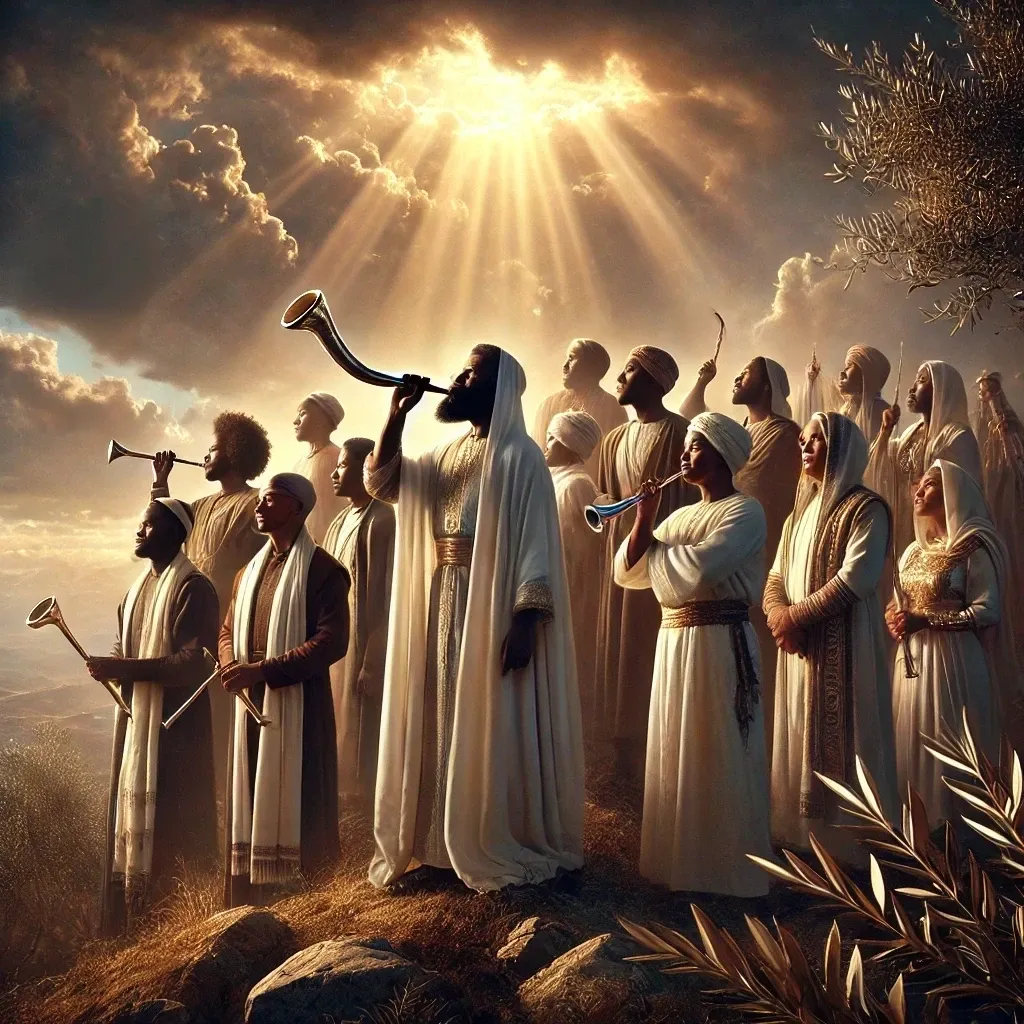
The Feast That Still Speaks Today Yom Teruah, commonly translated as the Feast of Trumpets, is not just a historical observance—it is a divine sign, echoing throughout generations. Often dismissed or misunderstood by mainstream religion, this appointed time remains a crucial marker between the Creator and His covenant people. Unlike man-made holidays, Yom Teruah is a command from YAHUAH, and keeping it reveals much about who we are, who we belong to, and what lies ahead. In a world full of distractions, delusions, and deception, Yom Teruah serves as a sacred alarm, calling His people to awaken, remember, and return. Biblical Foundation: Yom Teruah as a Sign The Torah introduces Yom Teruah in no uncertain terms—as a divine commandment: “Speak unto the children of Israel, saying, In the seventh month, in the first day of the month, shall ye have a sabbath, a memorial of blowing of trumpets, an holy convocation.”— Leviticus 23:24 (KJV) This is not a cultural festival or a national tradition. It is a holy convocation—a set-apart gathering. The Hebrew word “Teruah” means a shout, blast, or alarm, often from a trumpet or shofar. It signifies both war cries and joyful proclamations, linking this feast to divine warning and hope. Yom Teruah serves as a “zikkaron”, or memorial, of alarm. But memorial of what? A clue is found in Numbers 10:9: “And if ye go to war in your land against the enemy that oppresseth you, then ye shall blow an alarm with the trumpets; and ye shall be remembered before the Lord your God, and ye shall be saved from your enemies.” Blowing the trumpet is not only a call to action—it causes YAHUAH to remember His people. Yom Teruah is our part in that divine remembrance. When we honor this feast, we are actively participating in a sign between us and YAHUAH. The Covenant Connection: Why It Marks YAH’s People In Exodus 31:13, YAHUAH says: “Verily my sabbaths ye shall keep: for it is a sign between me and you throughout your generations; that ye may know that I am the ELOHIM that doth sanctify you.” All of YAHUAH’s Sabbaths—including the weekly Sabbath and the High Sabbaths (like Yom Teruah)—are signs of covenantal identity. Just as a wedding ring signifies marriage, so too do the Sabbaths identify those who belong to YAHUAH. Yom Teruah is no exception. Its observance distinguishes the obedient from the lawless. It is not optional, symbolic, or outdated. It is an eternal sign. Those who keep it proclaim through action: “We are set apart. We belong to YAHUAH.” Mainstream Christianity replaced this with unbiblical holidays—Rosh Hashanah, Christmas, Easter—none of which are found in Scripture. But Yom Teruah? That’s in the Book. (For a more indepth review of the importance of this High Holy Day please see our book, The Feast of Trumpets, Yom Teruah: An intimate understanding of its true meaning) Yom Teruah and the Identity of the Set-Apart Ones In a world that constantly seeks to erase or rewrite the identity of the true children of Israel, Yom Teruah stands as a marker of restoration. Hebrew Israelites who keep this feast reclaim their identity as the descendants of Jacob, bound not by church creeds but by covenant. “Blow up the trumpet in the new moon, in the time appointed, on our solemn feast day.”— Psalm 81:3 (KJV) The new moon of the seventh month is our solemn feast day. Not the world’s. Not the rabbinic calendar. Not the Gregorian schedule. It is a kingdom calendar—set in the heavens by YAHUAH Himself (Genesis 1:14). Observing Yom Teruah is an act of identity warfare. It proclaims to the world that we reject false labels, false holidays, and false doctrines. We stand with YAHUAH, and we blow the shofar in unity with His will. Obedience Over Tradition: Choosing YAH’s Calendar Keeping Yom Teruah requires intentional obedience. You must reject man’s traditions to embrace the commands of the Most High. As YAHUSHUA warned: “Thus have ye made the commandment of YAHUAH of none effect by your tradition.”— Matthew 15:6 (KJV) Many Hebrew Israelites come out of the church system and still hold onto its patterns. They’ll say they love YAH, but ignore His appointed times. Yom Teruah challenges that hypocrisy. Will you obey the calendar of Rome or the calendar of the Kingdom? By recognizing the new moon of the seventh biblical month, and treating that day as a High Sabbath, you are walking contrary to the traditions of the nations—and aligned with the Creator. This obedience may isolate you. It may confuse your family. It may cost you friends or fellowship. But it will align you with YAHUAH’s remnant—and that is the only group that will survive the coming judgment. (For a more indepth review of the prophetic nature of this High Holy Day please see our book, The Feast of Trumpets, Yom Teruah: An intimate understanding of its true meaning) The Blessings of Remembering the Alarming Sound Yom Teruah is not just about obedience—it’s about blessing. Scripture shows us that the trumpet (shofar) has always been tied to divine remembrance, deliverance, and return. In Jericho, the shofars brought the walls down (Joshua 6). In Joel, the trumpet warned of the coming day of YAH (Joel 2:1). In the last days, the trumpet will announce YAHUSHUA’s return: “For the ELOHIM himself shall descend from heaven with a shout, with the voice of the archangel, and with the trump of God…”— 1 Thessalonians 4:16 (KJV) Keeping Yom Teruah places you in alignment with this prophetic event. You are not merely observing a feast—you are training your ears and spirit to respond to the sound that will announce the return of your King. And what a blessing to be counted worthy of hearing that sound and being found ready. A Banner for the Remnant in the Last Days Yom Teruah is more than a holy day—it is a banner raised for the remnant in the last days.