
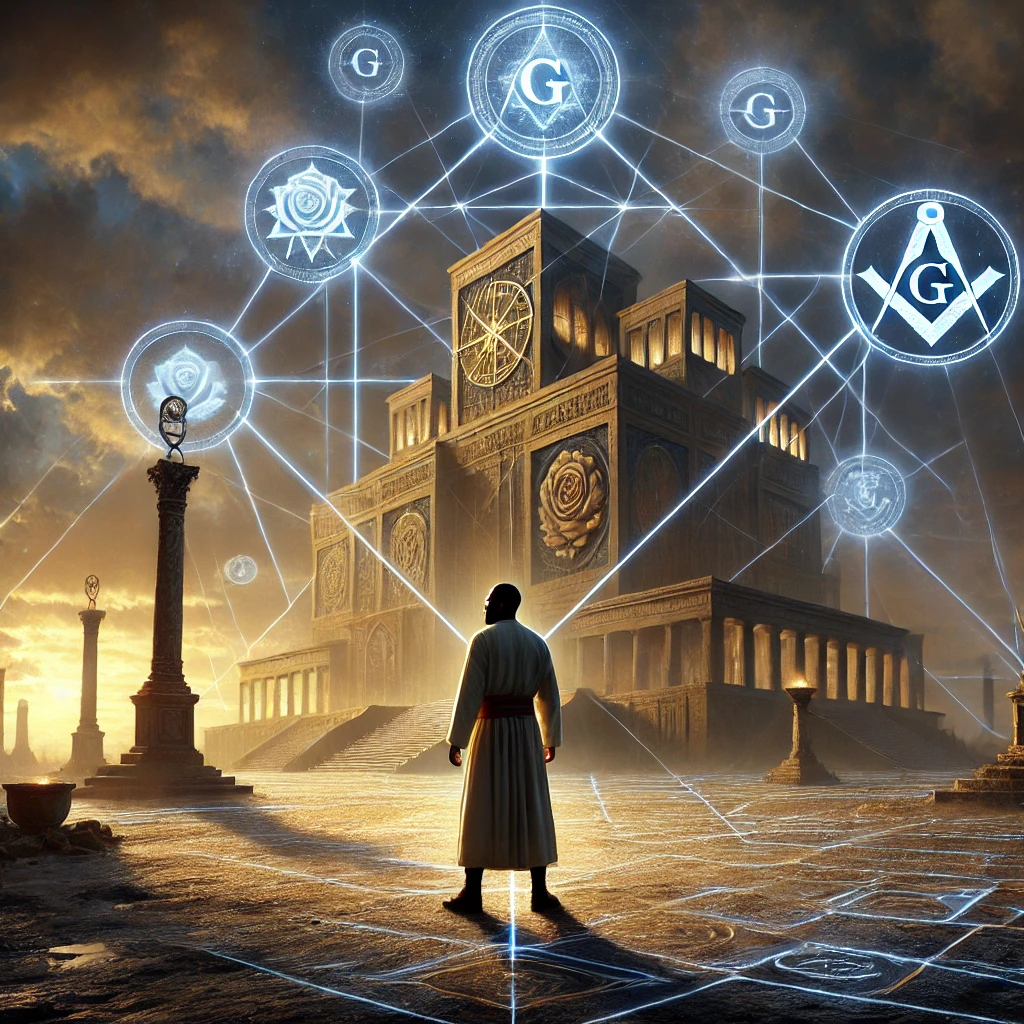
*This is the final article on the different groups and peoples who have put up a war standard against the holy children of Yah. The purpose of us doing this is to show our people the ideological background of these lucifarians, satanists, kabbalists, and many other groups who promote the whore of Babylon’s ideology. This ideology can be found practiced in all the major sanctioned religions, including Islam, Judaism, Christianity, Hinduism, and Buddhism, among others. This is an old war fought for many millennia and will only end when the Messiah Yahushua returns to break their kingdoms. Please take note of these ideologies because you will find their ideas in the world around you, and sometimes practiced by many good people who don’t know what they are practicing or where their practice comes from. The Seduction of Hidden Knowledge There has always been something alluring about hidden knowledge. For people awakening to identity, history, and spiritual deception, the idea that ancient truths were suppressed can be intoxicating. Once someone realizes that religious institutions have distorted Scripture and that history has been manipulated, it is natural to begin searching deeper. That search, however, is where many Israelites become vulnerable. In their hunger for restoration, they sometimes encounter systems that promise illumination but deliver mysticism. Among these systems are Rosicrucianism, Freemasonry, and a web of esoteric brotherhoods that trace their philosophical roots to ancient mystery religions of Egypt and Babylon. They use language that sounds elevated: “light,” “initiation,” “transformation,” “ancient wisdom,” “sacred geometry,” “inner awakening.” But when examined through the lens of Torah, these movements do not restore covenant obedience. They redirect it. “Beware lest any man spoil you through philosophy and vain deceit, after the tradition of men, after the rudiments of the world, and not after Christ.” — Colossians 2:8 (KJV) The issue is not whether these groups contain fragments of truth. The issue is whether they align with covenant law and the practices YAHUAH Himself wanted us to adhere to. The Origins of Rosicrucianism Rosicrucianism emerged publicly in early 17th-century Europe through a series of mysterious manifestos describing a hidden brotherhood preserving ancient wisdom allegedly learned in Egypt and the East. It promoted spiritual alchemy, Hermetic philosophy, symbolic interpretation of Scripture, and progressive enlightenment through initiation. Freemasonry, which formalized in the 18th century, absorbed many of these same elements — sacred geometry, temple symbolism, ritual degrees, allegorical instruction, and a universal spiritual framework centered on a symbolic “Great Architect.” At first glance, these movements may seem harmless or even intellectually stimulating. But their structure reveals something deeper. They are built on: Initiatory progression through degrees Hidden teachings revealed only to the “worthy” Symbolic ritual transformation Esoteric interpretation of spiritual truth After listing those elements, we must pause and reflect on what Torah looks like. The giving of the Law at Sinai was not a secret initiation. It was a public covenant. The commandments were proclaimed openly to the entire assembly of Israel — men, women, and children. The Most High did not require degrees of enlightenment before revealing His law. “The secret things belong unto the YAHUAH our ELOHIM: but those things which are revealed belong unto us…” — Deuteronomy 29:29 (KJV) In Torah, YAH keeps what is hidden. He reveals what is necessary for obedience. The people do not climb mystical ladders to unlock deeper commandments. They keep what has been given. This distinction is critical. Esoteric systems are built on ascent towards gaining “Godhood”. Covenant faith is built on obedience. The Pattern of Ancient Mystery Religion The ancient world was filled with mystery religions. Babylon, Egypt, Greece, and Rome all had initiatory cults that promised hidden wisdom and spiritual rebirth through ritual drama. Revelation describes a global spiritual system symbolically as “Mystery, Babylon the Great.” It is significant that the defining word is Mystery. “MYSTERY, BABYLON THE GREAT…” — Revelation 17:5 (KJV) Mystery religion operates through secrecy, symbolism, and hierarchy. Covenant operates through commandment, accountability, and separation. Freemasonry, Rosicrucianism, and related esoteric orders are not identical to ancient Babylonian worship, but structurally they mirror the same pattern: secret knowledge, progressive initiation, symbolic rebirth, and elite spiritual circles. This is why Hebrew Israelites must be cautious. The pattern matters more than the branding or name they call themselves. Competing Definitions of “Light” One of the most subtle elements within these movements is their redefinition of “light.” Rosicrucians speak of hidden light. Freemasons speak of receiving more light. Initiates move from darkness to illumination through ritual understanding. But Scripture already defines light: “Thy word is a lamp unto my feet, and a light unto my path.” — Psalm 119:105 (KJV) “For the commandment is a lamp; and the law is light…” — Proverbs 6:23 (KJV) There is no separate category of mystical light in Scripture. There is obedience to revealed law. When spiritual systems redefine light as internal awakening rather than covenant fidelity, they shift the foundation. Allegiance and Oaths: A Divided Loyalty Many esoteric orders use the language of knighthood, brotherhood, or sacred orders. Members take oaths, often symbolic but binding, pledging loyalty to the order and its secrets. Yet YAHUSHUA explicitly addressed oath-taking: “Swear not at all… But let your communication be, Yea, yea; Nay, nay…” — Matthew 5:34–37 (KJV) Israel’s allegiance is simple and undivided: “Thou shalt fear YAHUAH thy ELOHIM, and serve Him…” — Deuteronomy 6:13 (KJV) There is no second spiritual loyalty. No parallel covenant. No hidden brotherhood supplementing Torah. Why Esoteric Systems Appeal to the Awakened When Israelites awaken to identity, they often feel betrayed by church systems which is a justified feeling. They recognize historical distortions and begin asking deeper questions about suppressed knowledge. Esoteric movements position themselves as guardians of what was hidden. They claim access to ancient wisdom suppressed by institutions. But the serpent’s method in Genesis was not direct denial. It was reinterpretation. “Yea, hath ELOHIM said…?” — Genesis 3:1 (KJV) Esoteric systems rarely attack Torah outright. Instead, they allegorize it. They