
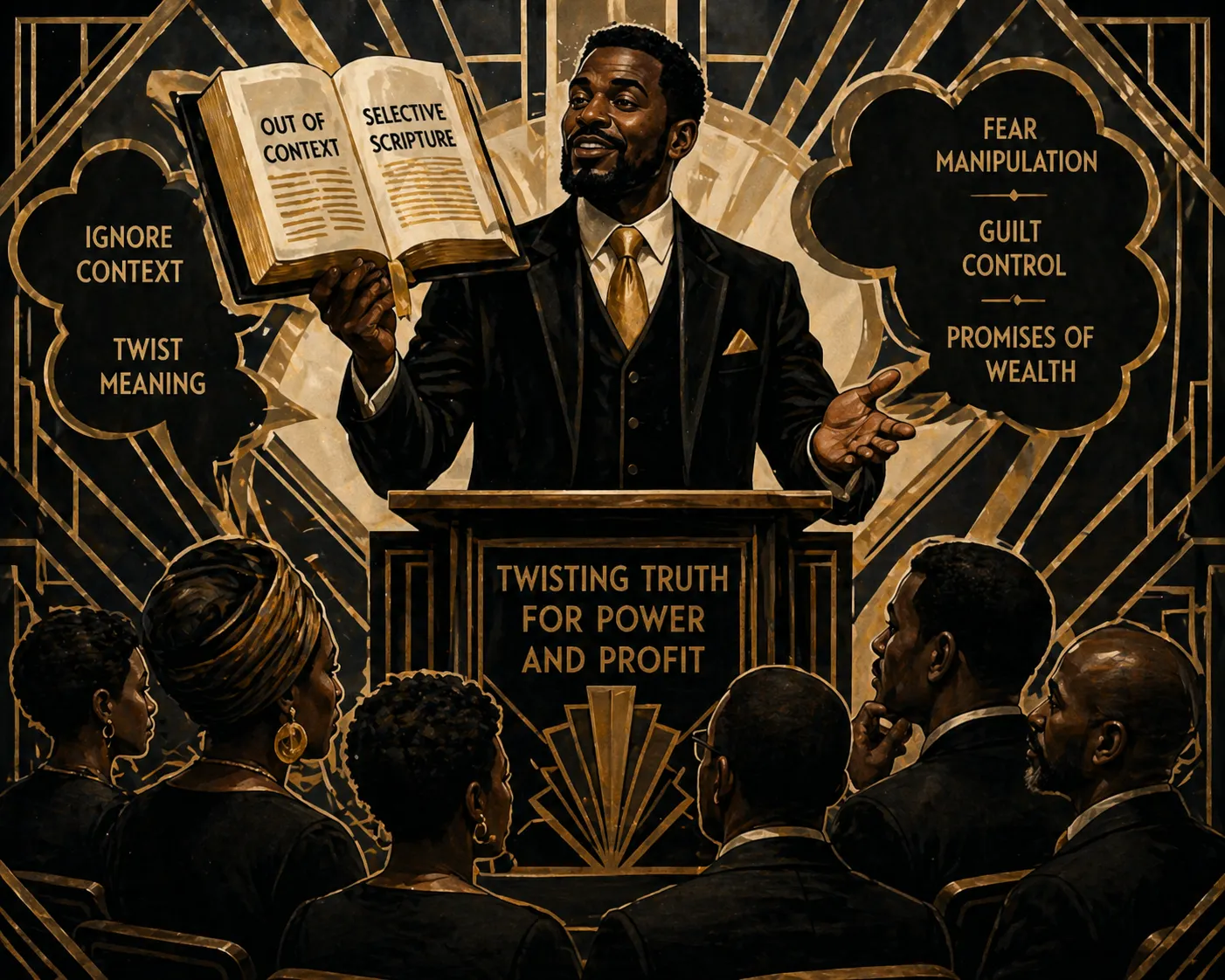
The Reality of False Teachers in the Last Days One of the most consistent warnings throughout Scripture is not only about sin in the world, but about corruption within what appears to be truth. The Bible does not present false teachers as rare or isolated figures. Instead, it reveals that they are a recurring and increasing presence—especially in the last days. The danger is not simply that false teachers exist, but that they often arise from within the very spaces where truth is expected. 2 Peter 2:1 (KJV) “But there were false prophets also among the people, even as there shall be false teachers among you, who privily shall bring in damnable heresies, even denying the ELOHIM that bought them, and bring upon themselves swift destruction.” Notice the phrase “among you.” This is critical. False teachers are not always outside of the faith community—they often operate within it. They may appear knowledgeable. They may be charismatic. They may even build large followings. But beneath the surface, they are introducing doctrines that lead people away from truth. Also notice the phrase “privily shall bring in.” This means secretly, subtly, and gradually. False teaching is rarely introduced all at once. It is often layered in slowly, mixed with truth, and presented in a way that avoids immediate resistance. This is why many people sit under false teaching without recognizing it. The error is not always obvious at first—it is embedded within something that sounds correct. (See our book, The Order Of Melchizedek: According To The 12 Patriarchs) The Nature of Scriptural Manipulation False teachers do not typically reject Scripture outright. If they did, they would be easily identified. Instead, they manipulate Scripture. They use it—but they do not use it correctly. This is one of the most dangerous forms of deception because it gives the appearance of biblical authority while distorting biblical truth. 2 Peter 3:16 (KJV) “As also in all his epistles, speaking in them of these things; in which are some things hard to be understood, which they that are unlearned and unstable wrest, as they do also the other scriptures, unto their own destruction.” The word “wrest” means to twist, distort, or force something into a meaning it was never intended to have. This verse reveals that false teachers often take Scriptures that are more complex or misunderstood and manipulate them to support their own doctrine. This is not a small issue. It says they do this “unto their own destruction.” That means twisting Scripture is not just misleading—it is spiritually dangerous for both the teacher and those who follow. (See our book, The Path: Of Righteousness) The First Example: Satan’s Use of Scripture To understand how Scripture can be manipulated, we must look at the first example of it—Satan himself. Matthew 4:5-6 (KJV) “Then the devil taketh him up into the holy city, and setteth him on a pinnacle of the temple,And saith unto him, If thou be the Son of YAHUAH, cast thyself down: for it is written, He shall give his angels charge concerning thee…” Notice what Satan does—he quotes Scripture. He says, “for it is written.” This shows that quoting Scripture alone is not proof of truth. But what is he doing? He is taking a promise of protection and attempting to use it to justify reckless behavior and test YAHUSHUA. He is misapplying Scripture. YAHUSHUA responds: Matthew 4:7 (KJV) “YAHUSHUA said unto him, It is written again, Thou shalt not tempt YAHUAH thy ELOHIM.” This shows the proper use of Scripture—Scripture must interpret Scripture. A single verse cannot be isolated and used in a way that contradicts the full counsel of the Word. This is exactly how false teachers operate today. They: Quote Scripture Remove context Apply it incorrectly Use it to support their message The Tactics of False Teachers False teachers do not all operate the same way, but Scripture reveals several consistent patterns in how they manipulate the Word. Taking Scripture Out of Context One of the most common tactics is removing verses from their proper context. A verse may be true, but when separated from: the surrounding passage the historical setting the intended audience it can be made to say something completely different. 2 Timothy 2:15 (KJV) “Study to shew thyself approved unto YAHUAH… rightly dividing the word of truth.” This verse shows that the Word must be rightly divided. That means it must be handled carefully, correctly, and in proper context. False teachers often do the opposite—they divide the Word incorrectly, handle it loosely, and completely out of context. This is to confuse the person they are teaching, making it seem that lies are truth and truth is lies. Selective Teaching: Ignoring the Full Counsel of YAHUAH Another tactic is teaching only parts of Scripture while ignoring others. They may emphasize: blessings without obedience grace without repentance faith without works love without correction But Scripture presents truth in balance. Acts 20:27 (KJV) “For I have not shunned to declare unto you all the counsel of YAHUAH.” Paul made it clear that he taught the full counsel of YAHUAH—not just the parts that were comfortable or popular. False teachers often avoid: commandments judgment holiness repentance because those topics challenge the listener. And will convict a person of the sins that they are pleased in doing. (See our book, The Path: Of Righteousness) Appealing to the Flesh Instead of Convicting It False teachers often tailor their message to what people want to hear. 2 Timothy 4:3-4 (KJV) “For the time will come when they will not endure sound doctrine; but after their own lusts shall they heap to themselves teachers, having itching ears;And they shall turn away their ears from the truth…” “Itching ears” refers to a desire for messages that are pleasing, comforting, and affirming. Instead of confronting sin, false teachers: soften the message redefine sin focus on personal gain avoid accountability This creates a following—but not true discipleship. Motivated by Gain, Not