
Hanukkah—also called the Feast of Dedication—is rooted in the Apocryphal Book of 1 Maccabees, which records a dark period in Israelite history. Around 168 BCE, the Greek ruler Antiochus Epiphanes desecrated the Temple in Jerusalem by outlawing the Torah, sacrificing swine on the altar, and forcing Hellenistic practices on YAH’s chosen people.
“And they set up the abomination of desolation upon the altar, and builded idol altars throughout the cities of Juda on every side.”
— 1 Maccabees 1:54
A small band of righteous Israelites, the Maccabees, rose in defiance. Led by Judah Maccabee, they launched a successful revolt, purified the Temple, and rededicated it back to YAH. This is the event remembered in Hanukkah.
“Then Judas and his brethren said, Behold, our enemies are discomfited: let us go up to cleanse and dedicate the sanctuary.”
— 1 Maccabees 4:36
The name “Hanukkah” literally means “dedication”, marking the Temple’s return to purity after being defiled by pagan hands.
(See our book, When Did Hanukkah Begin?: The Maccabees & the Feast of Dedication).
Not a Commanded Feast—But Still a Worthy Memorial
It’s important to note that Hanukkah is not one of the seven commanded feast days given by YAHUAH in Leviticus 23. There is no Torah mandate to observe Hanukkah as we observe Passover, Unleavened Bread, or Tabernacles.
However, that doesn’t mean the event should be ignored.
“There is a time to remember the works of our fathers, and a time to lift up praises to YAH for His deliverance.”
— Ecclesiasticus (Sirach) 44:1–2 (Apocrypha)
Even YAHUSHUA acknowledged this event in His time:
“And it was at Jerusalem the feast of the dedication, and it was winter. And YAHUSHUA walked in the temple in Solomon’s porch.”
— John 10:22–23 (KJV)
While YAHUSHUA is not recorded as celebrating Hanukkah in the way the world does today, He did not rebuke the remembrance either. His presence during the Feast of Dedication confirms its place as a historic event.
The Miraculous Provision of Light: Fact or Tradition?
A central part of modern Hanukkah traditions is the story of the miracle of oil—that one day’s supply lasted eight days. While this story appears in later rabbinic writings (Babylonian Talmud, Shabbat 21b), it does not appear in the Book of Maccabees.
This part of the tradition, while inspirational, is not scriptural. For Hebrew Israelites, our focus should not be on mystical oil legends, but on YAH’s real deliverance through His people’s righteous stand.
We can still light candles or lamps for eight nights as a memorial, but not in the context of man-made miracle stories. Our light comes from YAH’s Word:
“Thy word is a lamp unto my feet, and a light unto my path.”
— Psalm 119:105 (KJV)
(See our book, When Did Hanukkah Begin?: The Maccabees & the Feast of Dedication).
How Should Hebrew Israelites Observe Hanukkah?
Here’s how to keep Hanukkah in a biblically mindful, Hebrew Israelite way:
What to Do:
Read 1 Maccabees 1–4 aloud with your family.
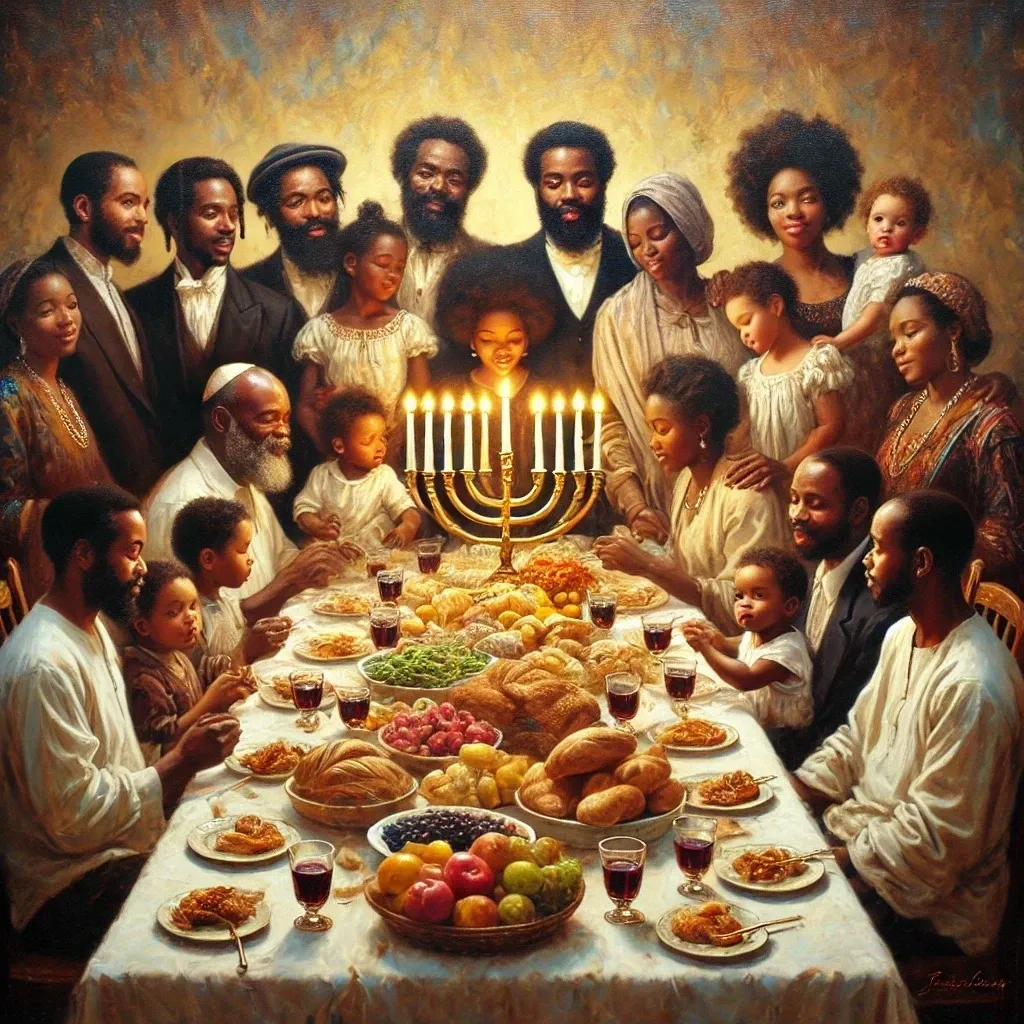
Light candles or a menorah for eight nights as a symbol of rededication (not a ritual).
Pray and give thanks for YAH’s faithfulness to protect His people.
Teach your children about the history of our people and how we are called to resist paganism and assimilation.
Sing psalms of deliverance, like Psalm 27 or 91.
What to Avoid:
Don’t copy modern Jewish or commercialized Hanukkah customs (e.g., dreidels, chocolate coins).
Don’t treat it like a Torah-commanded feast.
Don’t focus on unscriptural miracle traditions.
Remember, this is a historical remembrance, not a commanded holy day. It’s about honoring the spirit of resistance and dedication to YAH—not adopting rabbinical or Hellenistic customs.
Why Hanukkah Matters to Hebrew Israelites Today
Hanukkah reminds us of spiritual war, cultural defilement, and courageous obedience.
We are still in the days of spiritual warfare. Just as the Maccabees fought to cleanse the Temple, we must fight to cleanse our hearts and communities.
“Know ye not that ye are the temple of Elohim, and that the Spirit of Elohim dwelleth in you?”
— 1 Corinthians 3:16 (KJV)
The Greeks tried to erase the identity of Israel, replacing the Torah with their own laws and ways. Today, modern systems do the same—through religion, politics, and entertainment. Hanukkah calls us to resist, just like our ancestors did.
(For a breakdown of all of the High Holy Days please see our book, Hebrew Israelite Biblical Feast Days: What They Are And How We Celebrate Them)
A Sign of Yah’s Faithfulness
Though Hanukkah is not required, it reminds us that YAHUAH never abandons His people. When the righteous cry out, He answers.
“When the righteous cry for help, YAHUAH hears and delivers them out of all their troubles.”
— Psalm 34:17 (ESV)
The Maccabean revolt reminds us that even a small faithful remnant can overthrow great evil. It foreshadows the final deliverance of Israel in the last days when the enemy will again defile what is holy, but YAH will rise up a people purified by fire.
(See our book, When Did Hanukkah Begin?: The Maccabees & the Feast of Dedication).
Dedicate Yourself Anew
Hanukkah is not about flashy lights or ancient myths. It is about rededication—both of the Temple and of our own lives.
As Hebrew Israelites, we do not celebrate it because the world does—but because it is part of our people’s history. We remember the courage of those who refused to bow to paganism and instead risked everything to honor YAHUAH.
In a time when this world grows darker, let us be the menorah—lights shining bright, not by oil, but by the truth of YAH, the testimony of YAHUSHUA, and obedience to Torah.
“Let your light so shine before men, that they may see your good works, and glorify your Father which is in heaven.”
— Matthew 5:16 (KJV)
Shalom,
Keep in Touch
Explore the full Unknown Hebrew Collection for more scripture-based studies.
Stay updated with teachings — follow Unknown Hebrew on Substack.
Have questions? Contact Unknown Hebrew directly.