


*Since the Feast of Trumpets is quickly arriving we will do a 3 part series to explain the 3 foundational parts to this High Holy Day: The first article will be about How to Keep the Feast. The Second will be about the Prophetic nature of the Feast. And the Third will be about its necessary sign of the covenant between YAHUAH and His people.
The Call to Remember Yom Teruah
The Feast of Trumpets, or Yom Teruah literally means “Day of Blowing” or “Day of Alarming Sound.” This holy day is not just an ancient Israelite tradition—it’s a commanded memorial that still holds deep meaning for today’s Hebrew Israelites. It marks the beginning of the seventh month on the biblical calendar and sets the stage for the most solemn and prophetic time of the year.
It is a day of awakening, a spiritual alarm that calls the people of YAH to return, repent, and ready themselves for the coming judgment and redemption. Yom Teruah is a sign between YAHUAH and His people, and to neglect it is to ignore a critical part of our covenant identity.
“Speak unto the children of Israel, saying, In the seventh month, in the first day of the month, shall ye have a sabbath, a memorial of blowing of trumpets, an holy convocation.”
— Leviticus 23:24, KJV
(See our book, Hebrew Israelite Biblical Feast Days: What They Are And How We Celebrate Them)
The Biblical Command to Observe Yom Teruah
Yom Teruah is one of the seven appointed feasts YAHUAH commands His people to observe (Leviticus 23). It is not optional. It is not replaced by modern Christian holidays. It is a commandment for all generations.
Leviticus 23:23–25 (KJV)
“And the ELOHIM spake unto Moses, saying, Speak unto the children of Israel, saying, In the seventh month, in the first day of the month, shall ye have a sabbath, a memorial of blowing of trumpets, an holy convocation. Ye shall do no servile work therein: but ye shall offer an offering made by fire unto the ELOHIM.”
Numbers 29:1 (KJV)
“And in the seventh month, on the first day of the month, ye shall have an holy convocation; ye shall do no servile work: it is a day of blowing the trumpets unto you.”
Key Takeaways:
It is a holy day of rest—no work should be done.
It is a memorial, meaning we remember and rehearse something important.
It is a holy convocation, meaning we are to assemble together in worship.
The central act of the day is the blowing of trumpets, or shofars.
Preparing for the Day of Alarming Sound
Yom Teruah isn’t just about showing up and hearing a trumpet blast. It’s a day that demands spiritual readiness.
1. Examine Your Life
This feast launches the 10 Days of Awe, leading to the Day of Atonement. It’s a call to repentance, confession, and turning from sin.
“Blow the trumpet in Zion, and sound an alarm in my holy mountain: let all the inhabitants of the land tremble: for the day of the ELOHIM cometh, for it is nigh at hand.”
— Joel 2:1, KJV
The trumpet is a wake-up call, not a celebration. It’s a warning—the King is coming. Are you ready?
2. Set the Day Apart
Just like the Sabbath, this day should be treated as holy.
Prepare meals the day before (unless it falls on a weekly Sabbath).
Clean your home.
Have your garments clean and ready.
Eliminate distractions: no work, no business, no buying and selling.
3. Gather with Believers
Yom Teruah is a holy convocation, which means a set-apart gathering. If you can, gather with fellow believers for prayer, reading of Scripture, and blowing the shofar.
How to Blow the Shofar: What It Means and How to Do It
The shofar, made from a ram’s horn, is the primary tool of this feast. But it’s more than a sound—it’s a symbol of:
Warning of judgment
The coronation of a King
The awakening of the sleeping
A call to assembly and repentance
Numbers 10:9–10 (KJV)
“And if ye go to war in your land against the enemy that oppresseth you, then ye shall blow an alarm with the trumpets; and ye shall be remembered before YAHUAH your ELOHIM…Also in the day of your gladness, and in your solemn days…ye shall blow with the trumpets.”
There are four traditional shofar blasts used:
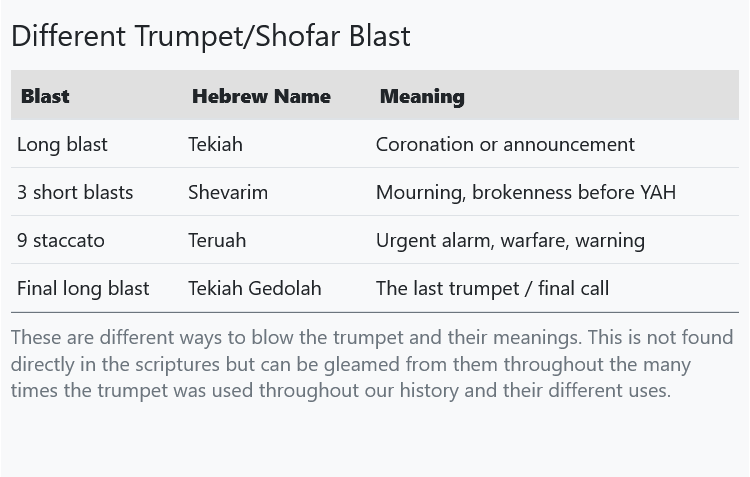
Blowing the shofar isn’t just symbolic—it’s prophetic rehearsal.
“With trumpets and sound of cornet make a joyful noise before the ELOHIM, the King.”
— Psalm 98:6, KJV
Do’s and Don’ts for Keeping the Feast Day
Here’s how to honor this memorial biblically and practically:
✅ What to Do:
Rest from all servile work (as you would on the Sabbath)
Blow the shofar or hear it blown
Read Scriptures about trumpets and judgment
Reflect and repent
Fast if you feel led
Assemble with other believers
Teach your children what the day means
❌ What NOT to Do:
Do not work a job or make money
Do not shop, cook, or run errands
Do not treat it like an ordinary day
Do not ignore the spiritual call to prepare your heart
This is not just ritual—it’s covenant obedience. YAH is testing to see who remembers and who is asleep.
(See our book, Hebrew Israelite Biblical Feast Days: What They Are And How We Celebrate Them)
Set-Apart People Keep Set-Apart Days
To keep Yom Teruah is to stand apart from the world and return to the commandments of YAHUAH. It is an act of spiritual warfare, obedience, and identity.
“My sheep hear my voice, and I know them, and they follow me.”
— John 10:27, KJV
When we blow the shofar, we aren’t just making noise. We are awakening our spirits, declaring the kingship of YAH, and remembering the covenant.
Yom Teruah is not just a shadow of things to come. It is a living rehearsal of the day when the final trumpet will sound, and YAHUSHUA will return.
Will you be ready? Or will you be caught sleeping?
Shalom,
Explore the full Unknown Hebrew Collection for more scripture-based studies.
Stay updated with teachings — follow Unknown Hebrew on Substack.
Have questions? Contact Unknown Hebrew directly.