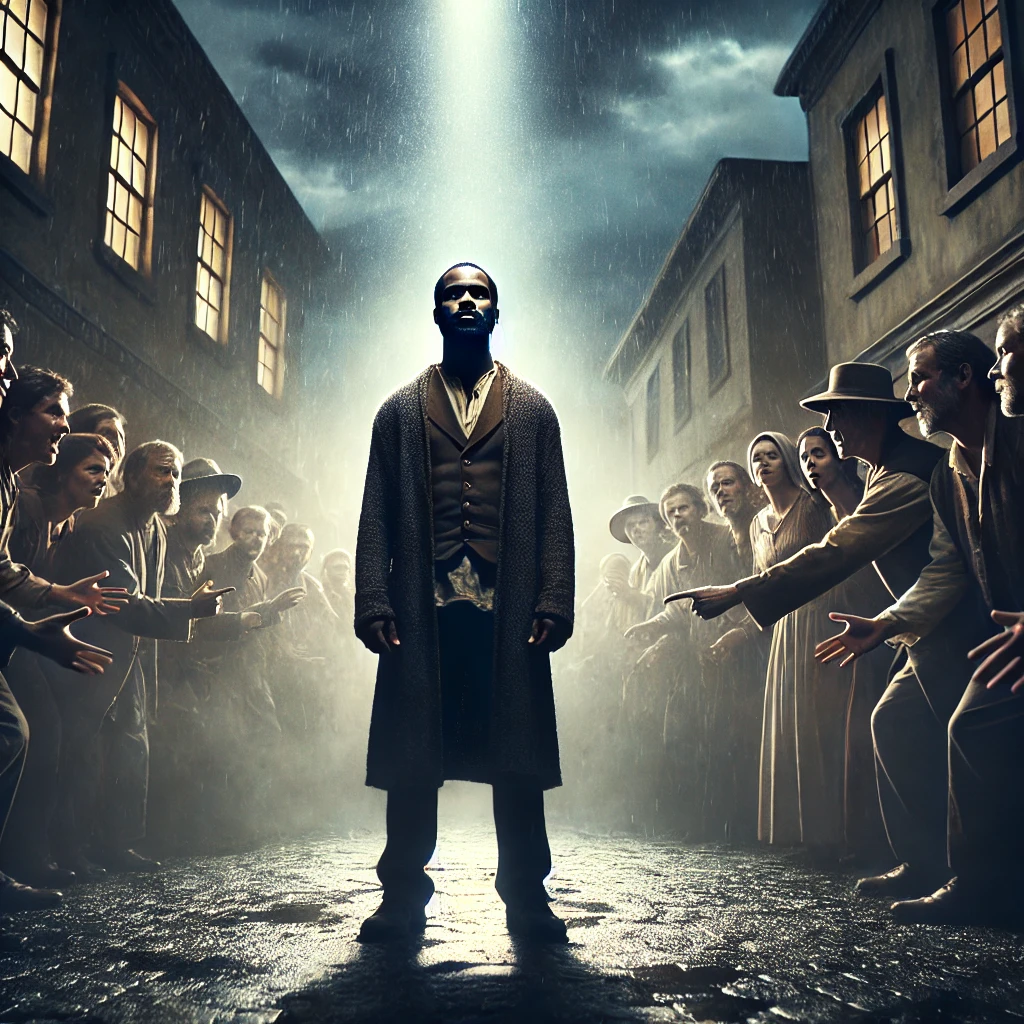


Whose Calendar Are You Following?
Every year, the world erupts in celebration on January 1st—fireworks, champagne, resolutions, and parties. But have you ever stopped to ask: Where did this day come from? Who declared it to be the new year? As Hebrew Israelites returning to the covenant, we must question every tradition of the world and examine it under the light of Scripture.
YAHUAH commands His people to follow His appointed times—not the times set by heathen nations. To celebrate January 1st as a “New Year” is to walk in agreement with a counterfeit calendar system—one created by Rome, ruled by pagan gods, and completely divorced from the biblical order. This article will expose the origins of this date and prove that it is not of YAH.
The Pagan Roots of January 1st
The Roman God Janus
January 1st was established in honor of Janus, the Roman god of beginnings, gates, transitions, and duality. He is typically depicted as having two faces—one looking back, one looking forward. Janus had nothing to do with the Elohim of Abraham, Isaac, and Jacob. He was a pagan idol associated with time, change, and the deception of cycles.
The month of January is named after Janus. This date was chosen by Julius Caesar when he introduced the Julian calendar in 45 BCE, aligning with the worship of this deity—not with the movements of YAH’s appointed feast days or the seasons of agricultural renewal. It also has ties to Zepho, the grandson of Esau, who, according to the book of Jasher, killed a half-goat, half-human beast in a cave and also took over the area of Italaia prior to the Roman Empire. There is archeological evidence that he was the man behind Janus and why it is celebrated.
Tied to Saturnalia and Pagan Festivals
The timing of January 1st follows Saturnalia, the Roman festival to honor Saturn, god of wealth, agriculture, and time. Saturnalia was filled with drunken revelry, orgies, and role reversals, and ended around December 25th. January 1st became the final transition point—a ceremonial “clean slate” into the new year, blessed by Janus and Saturn.
These were not innocent traditions. They were rituals rooted in witchcraft, sun worship, and idolatry, forbidden in Torah.
“Thus saith YAHUAH, Learn not the way of the heathen…”
— Jeremiah 10:2
What the Bible Says About the True New Year
The Biblical New Year Begins in Spring
The true New Year, according to Scripture, begins in the month of Abib (also known as Nisan), which falls around March–April in the Gregorian calendar. It aligns with the barley harvest, spring renewal, and the Exodus from Egypt.
“And YAHUAH spake unto Moses and Aaron in the land of Egypt, saying, This month shall be unto you the beginning of months: it shall be the first month of the year to you.”
— Exodus 12:1–2 (KJV)
YAH chose this time to deliver His people—not in the dead of winter, but during the season of growth and deliverance. Abib/Nisan is a spiritually significant month that includes the Feast of Passover and Unleavened Bread—the time when Israel was commanded to remember YAH’s mighty hand of redemption.
Celebrating a new year in the cold darkness of winter, during a time previously used for idolatry and sin, directly opposes YAH’s chosen order.
(See our book, Hebrew Israelite Biblical Feast Days: What They Are And How We Celebrate Them and Passover: Mysteries Revealed)
The Dangers of Keeping Pagan Traditions
Many believers think it’s harmless to celebrate January 1st. But Scripture clearly warns against mixing truth with paganism.
“Beware lest any man spoil you through philosophy and vain deceit, after the tradition of men, after the rudiments of the world, and not after Messiah.”
— Colossians 2:8 (KJV)
“Take heed to thyself that thou be not snared by following them… and that thou inquire not after their gods, saying, How did these nations serve their gods? even so will I do likewise.”
— Deuteronomy 12:30 (KJV)
YAHUAH is not honored when His people take part in customs designed to honor false gods. Even if we don’t light candles to Janus or bow to Saturn, our participation validates these systems and desensitizes us spiritually.
This is how idolatry always works—through deception, normalization, and cultural blending.
Why Hebrew Israelites Must Reject January 1st
The awakening of the Hebrew Israelites is about restoring the ancient paths. We are called to be set apart—not partially holy and partially worldly. Keeping January 1st as a New Year is part of Babylon’s system of timekeeping, not YAHUAH’s.
When we align our time with the world’s calendar, we move further away from the divine timing of the Most High. It affects how we keep feasts, how we count Sabbaths, and how we spiritually prepare.
“And that ye may put difference between holy and unholy, and between unclean and clean.”
— Leviticus 10:10 (KJV)
We are not to follow Rome’s rhythm. We are to follow the Torah’s rhythm.
(See our book, The Path: Of Righteousness)
Come Out of Her, My People
“And I heard another voice from heaven, saying, Come out of her, my people, that ye be not partakers of her sins…”
— Revelation 18:4 (KJV)
Celebrating the world’s New Year is not just a social issue—it is a spiritual alignment. It connects the believer to Babylon, not Zion. It aligns the soul with rebellion, not with righteousness.
There is a remnant rising that rejects man-made traditions. That remnant is returning to the biblical calendar, observing the Feasts of YAH, and restoring the original time that YAHUAH declared from the beginning.
(See our book, The Chosen Seed: Predestination)
Final Call to Action
➤ Stop celebrating January 1st as the New Year.
➤ Study and observe YAH’s calendar beginning with Abib/Nisan.
➤ Warn others—especially our people—of the lies behind the world’s timekeeping.
➤ Come into alignment with YAHUAH’s appointed times.
Keep in Touch
Explore the full Unknown Hebrew Collection for more scripture-based studies.
Stay updated with teachings — follow Unknown Hebrew on Substack.
Have questions? Contact Unknown Hebrew directly.
Shalom,