
The Mo’edim as Prophetic Templates
The Hebrew word mo’ed (appointed time) indicates a meeting set by YAHUAH Himself. As we’ve seen throughout Torah, these appointments are not just memorials of past events—they are shadows of things to come:
Colossians 2:16-17 (KJV)
“Let no man therefore judge you… in respect of an holyday… Which are a shadow of things to come; but the body is of Christ.”
Sukkot is the final feast in the annual cycle, and just like Passover and Pentecost have prophetic fulfillment in YAHUSHUA’s death and the giving of the Ruach, Tabernacles points toward the final phase—the return of YAHUSHUA and His Kingdom on Earth.
The Tabernacle Pattern: YAH’s Desire to Dwell With Us
From the very beginning, YAHUAH’s desire has been to dwell with man.
Leviticus 26:11-12 (KJV)
“And I will set my tabernacle among you… And I will walk among you, and will be your God, and ye shall be my people.”
This echoes the intimacy of Eden, where YAH walked with Adam. The wilderness Tabernacle was a foreshadow of this desire, and Sukkot memorializes that dwelling.
But in the prophetic future, we are promised a literal, permanent fulfillment of this pattern:
Revelation 21:3 (KJV)
“Behold, the tabernacle of God is with men, and he will dwell with them…”
This is the ultimate goal of Sukkot—the Kingdom restored and the marriage between YAH and His people made manifest.
(See our books, Millennium & Kingdom Reign SUKKOT: Feast of Booths/Feast of Tabernacles, The 8th Day Shemini Atzeret: The Last Great Day)
Prophecies in Isaiah, Ezekiel, and Zechariah
The prophets consistently saw visions of a time when YAHUAH would reign physically on Earth.
Isaiah 4:5-6 (KJV)
“And the LORD will create… upon every dwelling place of mount Zion… a cloud and smoke by day, and the shining of a flaming fire by night… there shall be a tabernacle.”
Ezekiel 37:27 (KJV)
“My tabernacle also shall be with them: yea, I will be their God, and they shall be my people.”
These prophecies are extensions of the Sukkot imagery—a divine shelter, a physical Kingdom, and a restored Israel ruled by Mashiach.
Zechariah 14, in particular, is directly tied to Sukkot in a future context:
Zechariah 14:16 (KJV)
“…every one that is left of all the nations… shall even go up from year to year to worship the King… and to keep the feast of tabernacles.”
This is a post-judgment reality, indicating that Sukkot remains relevant even after the return of the King.
(See our books, Millennium & Kingdom Reign SUKKOT: Feast of Booths/Feast of Tabernacles, The 8th Day Shemini Atzeret: The Last Great Day)
YAHUSHUA at the Feast: The Waters of Life (John 7)
YAHUSHUA attended Sukkot and made one of His most prophetic declarations:
John 7:37-38 (KJV)
“In the last day, that great day of the feast, YAHUSHUA stood and cried… If any man thirst, let him come unto me, and drink.”
This was not random. The last day of Sukkot was marked by the “Water Pouring Ceremony” at the Temple, where water from the Pool of Siloam was poured on the altar to ask for rain and symbolize the Ruach Ha’Kodesh.
YAHUSHUA was revealing Himself as the Living Water, the fulfillment of Sukkot’s spiritual promise. His declaration was a prophetic act, saying:
“I am the one this feast points to. I will quench the drought of your souls and usher in the true Kingdom.”
The Final Ingathering and Global Pilgrimage (Zechariah 14)
Sukkot also represents the final ingathering of the harvest—symbolic of the ingathering of souls and nations in the last days.
Exodus 23:16 (KJV)
“…the feast of ingathering, which is in the end of the year, when thou hast gathered in thy labours…”
In the prophetic realm, this translates to a global return to Zion under Mashiach’s reign. Nations will be required to keep Sukkot or face drought:
Zechariah 14:17 (KJV)
“And it shall be, that whoso will not come up… upon them shall be no rain.”
This is no longer optional—it is the law of the Kingdom. Those who submit will be part of the great millennial reign.
(See our books, Millennium & Kingdom Reign SUKKOT: Feast of Booths/Feast of Tabernacles, The 8th Day Shemini Atzeret: The Last Great Day)
Revelation and the New Jerusalem: The Ultimate Tabernacle
Revelation’s final chapters are filled with Sukkot themes:
Revelation 21:3 (KJV)
“…the tabernacle of God is with men, and he will dwell with them…”
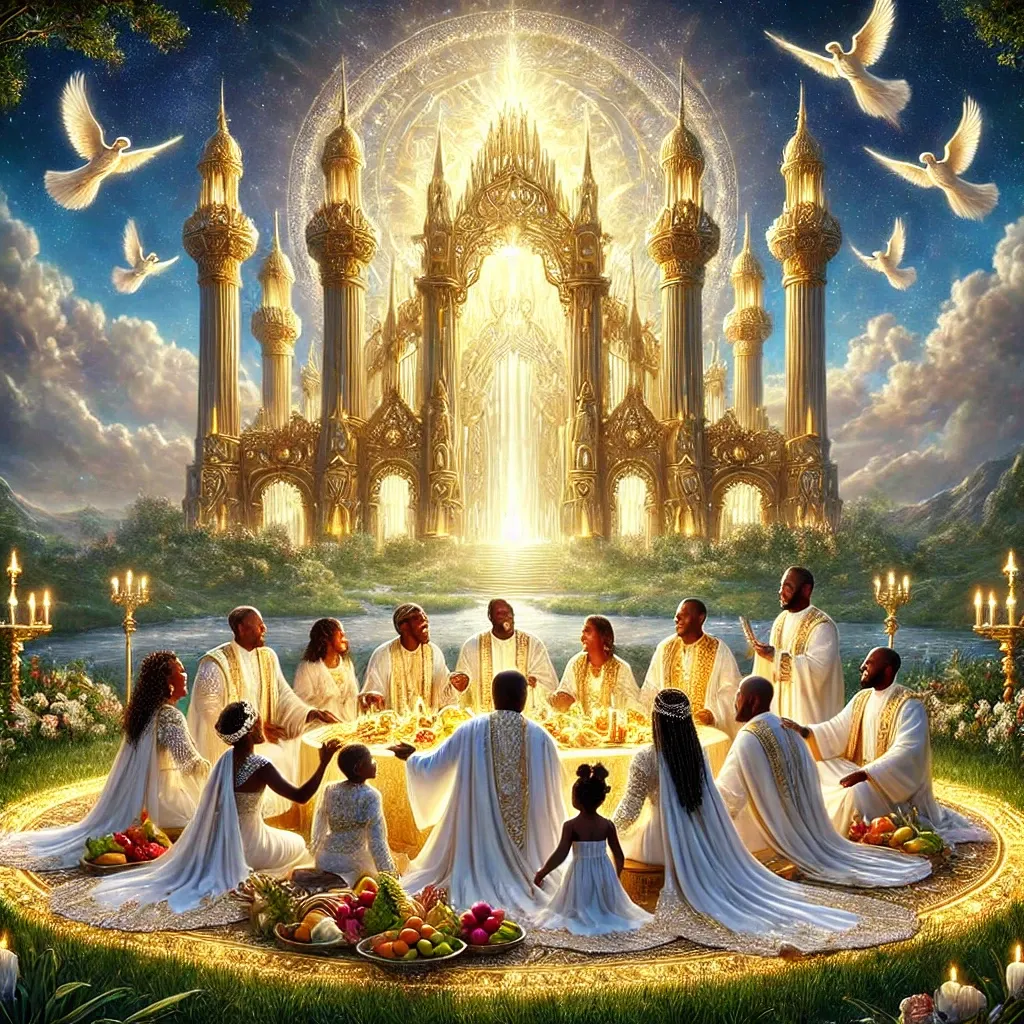
This New Jerusalem is not just a city—it is a tabernacle where YAHUAH and the Lamb dwell with the faithful. It is the eternal fulfillment of Sukkot’s temporary shelters:
No more wandering
No more shadows
Permanent glory and nearness to YAHUAH
The Millennial Reign and Sukkot’s Role in the Future
In the 1,000-year reign of YAHUSHUA, the Torah will be restored:
Isaiah 2:3 (KJV)
“…for out of Zion shall go forth the law, and the word of the LORD from Jerusalem.”
This includes feast day observance.
Ezekiel 45:25 (KJV)
“In the seventh month, in the fifteenth day… shall he do the like in the feast of the seven days.”
During the millennium, Sukkot will be kept by every nation, not as a Jewish tradition, but as a universal act of worship under the true King.
(See our books, Millennium & Kingdom Reign SUKKOT: Feast of Booths/Feast of Tabernacles, The 8th Day Shemini Atzeret: The Last Great Day)
Why This Feast Prepares Us for What’s Coming
Sukkot is not a relic of the past—it’s a blueprint for the future.
It prepares us for YAH’s physical presence
It rehearses the return of the King
It models the coming Kingdom lifestyle
It previews the final wedding feast of the Lamb
By keeping Sukkot now, we declare with boldness:
“We are waiting for the King. We believe in His promises. We dwell in tents, but we are citizens of Zion.”
Let those who have ears hear what the Ruach is saying. The Feast of Tabernacles is not optional—it is preparation for glory.
Shalom,
Stay Connected
Explore the full Unknown Hebrew Collection for more scripture-based studies.
Stay updated with teachings — follow Unknown Hebrew on Substack.
Have questions? Contact Unknown Hebrew directly.