
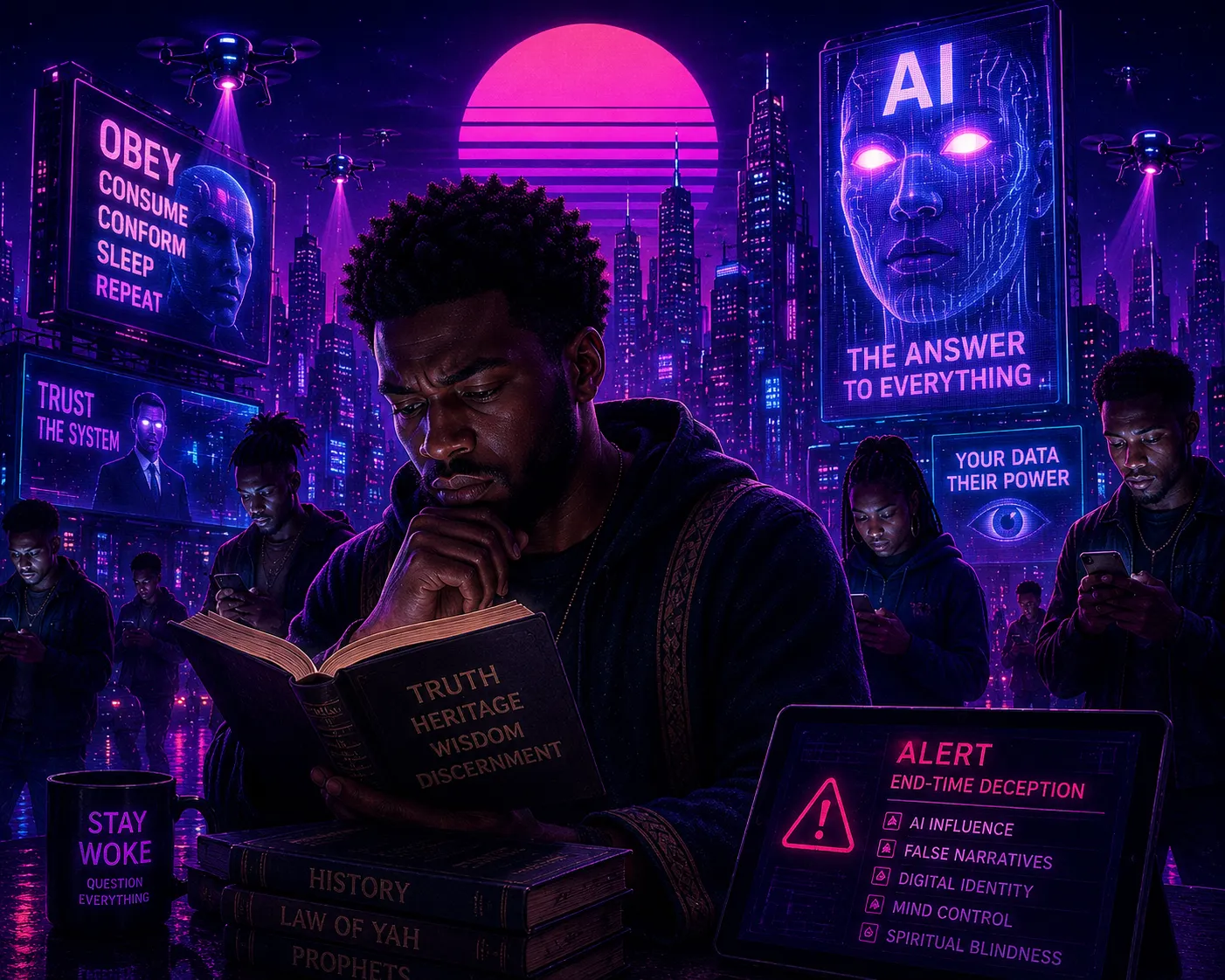
Living Through a Historic Shift Every generation experiences technological change, but there are rare moments in history when humanity crosses a threshold that permanently alters civilization. The invention of the printing press changed how information moved through society. The Industrial Revolution changed how people worked. The internet changed how people communicated. Artificial intelligence may prove to be another one of those moments. Whether a person embraces AI enthusiastically or views it with suspicion, few would deny that something significant is happening. Technologies that seemed impossible only a decade ago are now available to ordinary people. Computers can generate essays, create artwork, mimic human voices, write software, translate languages, and answer complex questions within seconds. For many people, these developments are exciting. Businesses see opportunity. Researchers see innovation. Governments see strategic advantages. Consumers see convenience. Yet believers should be asking a different question. The most important question is not what artificial intelligence can do. The most important question is what artificial intelligence may do to humanity’s ability to recognize truth. Because if there is one theme that runs consistently throughout biblical prophecy concerning the last days, it is deception. Not war. Not famine. Not economic collapse. Deception. Again and again, the Scriptures warn that the final generations of humanity will face unprecedented confusion regarding what is true and what is false. For Israelites seeking to remain faithful to YAH, this raises an important possibility. Could artificial intelligence become one of the greatest tools for deception ever created? And if so, how should believers prepare themselves? (See our book, The Path: Of Righteousness) The Last Days Are Defined By Deception One of the most striking aspects of end-time prophecy is how frequently the Messiah warned about deception. When the disciples asked about the signs of His coming and the end of the age, His first response was not about warfare or politics. His first warning concerned deception. Matthew 24:4-5 (KJV) “And YAHUSHUA answered and said unto them, Take heed that no man deceive you. For many shall come in my name, saying, I am Christ; and shall deceive many.” This is significant. Before discussing tribulation, persecution, or world events, the Messiah emphasized the danger of being deceived. Why? Because deception is uniquely dangerous. A person who knows they are being attacked can defend themselves. A person who knows they are being lied to can reject the lie. The deceived person believes they possess the truth while actually embracing error. That is what makes deception so powerful. The challenge becomes even greater when technology enables lies to appear increasingly convincing. For most of human history, evidence was relatively simple to evaluate. A photograph was considered evidence. A recorded voice was considered evidence. A video was considered evidence. Today, artificial intelligence is rapidly changing those assumptions. Voices can be cloned. Images can be generated. Videos can be fabricated. Entire conversations can be simulated. The result is a world where seeing is no longer believing. And that reality should cause believers to pay attention. Remember the meaning of Ha’Satan is deceiver, so in the days ahead we are moving in a world where he will dominate the minds of many people, both Israelites and non-Israelites alike. But at the same time Ha’Satan increases his power, YAHUAH is increasing his within this world as well. (See our book, The Chosen Seed: Predestination) The Danger Is Not AI Itself Whenever new technology emerges, people often divide into two extreme camps. One group views the technology as entirely good. The other views it as entirely evil. The biblical perspective is usually more balanced. Technology itself is generally neutral. Its moral value depends upon how it is used. The internet can spread Scripture or pornography. Printing presses can publish Bibles or propaganda. Television can educate or corrupt. The same principle applies to artificial intelligence. AI can help translate ancient manuscripts. AI can assist medical research. AI can improve productivity. AI can help people learn new skills. Yet the same technology can also be used to manipulate, deceive, and control. The danger is not found within the tool itself. The danger is found within the human heart that controls the tool. This is why discussions about AI should never focus exclusively on machines. The real issue remains human nature. Scripture consistently teaches that mankind possesses an extraordinary capacity for corruption. Technology merely amplifies that capacity. A dishonest person with powerful tools becomes capable of greater deception than a dishonest person without them. And this is where AI becomes particularly relevant to end-time prophecy. The concern is not whether machines become evil. The concern is whether evil people gain unprecedented abilities to influence perception, manufacture narratives, and manipulate reality. An example of this is people like Joe Rogan and Peter Thiel who are trying to advocate for an AI “Jesus” and that “God” can be AI. These ideas are not new, but it does explain how people with little to no understanding of the scriptures can deceive the masses into believing that the tool of AI itself can be used to create a “god.” (See our book, Knowing the Father and the Son: Those who seek the truth will find it) Knowledge Is Increasing, But Wisdom Is Not One of the most fascinating prophecies in Scripture appears in the book of Daniel. Daniel 12:4 (KJV) “But thou, O Daniel, shut up the words, and seal the book, even to the time of the end: many shall run to and fro, and knowledge shall be increased.” Many believers view this verse as describing the modern world. Never before has humanity possessed access to so much information. Billions of pages of content exist online. Entire libraries fit inside a smartphone. Artificial intelligence can summarize vast amounts of information within seconds. Knowledge is certainly increasing. But there is an important distinction between knowledge and wisdom. Knowledge answers questions. Wisdom asks whether those questions should be asked. Knowledge provides information. Wisdom provides discernment. Knowledge tells a person what can be