
Why It Is Important to Understand How Biblical Fasting Was Actually Practiced
Many people today speak about fasting, but not everyone understands how fasting was actually practiced in the Scriptures. Some treat fasting as a light spiritual exercise. Some reduce it to a health practice. Others assume any form of temporary self-denial automatically counts as the kind of fast the Bible speaks about. But when we study the Scriptures carefully, we find that biblical fasting among the Israelites was serious, purposeful, and deeply connected to humility before YAH.
Fasting in the Bible was not primarily about dieting, detoxing, or improving discipline for its own sake. It was about afflicting the soul, humbling oneself, seeking YAH, mourning, repenting, crying out in distress, and responding to moments of deep spiritual urgency.
That is why understanding how the Israelites fasted matters. It helps us separate:
biblical fasting from modern trends
scriptural purpose from empty ritual
true self-affliction from convenient abstinence
covenant humility from shallow religious habit
When the Israelites fasted, it was often done in connection with:
mourning
repentance
national sin
judgment
war
danger
grief
intercession
seeking guidance
humbling themselves before YAH
So if we want to understand fasting properly, we cannot begin with modern assumptions. We must begin with Scripture itself.
(See our book, How Israelites Pray To Their ABBA)
The Core Meaning of Fasting in Scripture
Before discussing the different lengths and forms of fasting, we need to understand what fasting meant in the biblical world.
At its most basic level, fasting meant abstaining from food for a spiritual purpose. In some cases, water was also withheld for a time, but the ordinary biblical pattern of fasting is most often understood as refraining from food while seeking YAH with seriousness.
But fasting was never just about not eating. Scripture ties it directly to humbling the soul.
Psalm 35:13 (KJV)
“But as for me, when they were sick, my clothing was sackcloth: I humbled my soul with fasting…”
This verse is foundational. David does not describe fasting merely as going hungry. He says, “I humbled my soul with fasting.” That is the biblical heart of the matter. Fasting is a means of bringing yourself low before YAH.
We see the same connection in the language of affliction.
Leviticus 16:29 (KJV)
“…ye shall afflict your souls…”
Isaiah 58:3 (KJV)
“Wherefore have we fasted, say they, and thou seest not? wherefore have we afflicted our soul…”
This shows us that biblical fasting involves:
denial of the flesh
seriousness before YAH
inward humbling
spiritual focus
intentional seeking
So when we ask how Israelites fasted, we must remember that the deeper issue is not the mechanics alone, but the posture. Still, the mechanics matter because they show how that posture was expressed in real life.
(See our book, Ancient Hebrew Prayer Principles: Keys To Getting Your Prayers Answered)
Fasting From Morning to Evening: The Day Fast Pattern
One of the clearest biblical patterns is fasting for the day, often until evening. This is important because not every fast in Scripture lasted multiple days. Many fasts were observed during the daylight hours and concluded when evening came.
We see this pattern clearly in the account following the tragic events in Judges.
Judges 20:26 (KJV)
“Then all the children of Israel, and all the people, went up, and came unto the house of YAHUAH, and wept, and sat there before the ELOHIM, and fasted that day until even, and offered burnt offerings and peace offerings before the ELOHIM.”
This verse gives us a direct example of a fast lasting “that day until even.” Notice the setting:
they came before YAH
they wept
they sat before Him
they fasted until evening
This was not casual abstinence. It was tied to grief, inquiry, and desperation. Israel had suffered loss, and they sought YAH with tears, fasting, and offerings.
This day-until-evening pattern appears again.
2 Samuel 1:12 (KJV)
“And they mourned, and wept, and fasted until even, for Saul, and for Jonathan his son…”
Again, the fast is connected to mourning and lasts until evening.
So we can say clearly that one biblical model of fasting among the Israelites was a sunrise-to-sunset or day-to-evening fast, where food was withheld during the day as an act of mourning, humility, and seeking YAH.
This is important because it shows that not every fast was a prolonged multi-day event. Sometimes a one-day fast, kept seriously until evening, was the chosen form.
Why Evening Often Marked the Conclusion of a Fast
The fact that many fasts ended at evening is not accidental. In the biblical rhythm of life, evening often marked a transition point and the close of the daytime period of affliction.
In practical terms, a fast until evening meant:
the person spent the day in humility
bodily appetite was denied during the active period of the day
the focus remained on prayer, grief, repentance, or seeking
relief came only after the appointed period was completed
This helped reinforce discipline and intention. The person was not grazing throughout the day or lightly modifying their diet. They were setting aside food for a fixed period in order to bring the flesh into subjection and seek YAH with seriousness.
This pattern also teaches something spiritually. It reminds us that fasting is not meant to be adjusted constantly to fit comfort. A fast had structure. It had an appointed duration. It required resolve till its end.
(See our book, Prayer of a Hebrew Israelite)
Full-Day Fasts and the Affliction of the Soul
Another important biblical pattern is the full-day fast, especially in relation to solemn observance and soul-affliction.
The Day of Atonement is the clearest example of this.
Leviticus 23:27-32 (KJV)
“Also on the tenth day of this seventh month there shall be a day of atonement… and ye shall afflict your souls…
It shall be unto you a sabbath of rest, and ye shall afflict your souls: in the ninth day of the month at even, from even unto even, shall ye celebrate your sabbath.”
This passage is crucial because it gives an explicit time frame: “from even unto even.” That means from one evening to the next evening, a full-day period. Although the text emphasizes afflicting the soul rather than using the word “fast” directly, the scriptural and historical understanding has long connected this affliction with fasting.
This teaches us several important things:
some fasts were full-day observances
they were tied to solemnity and holiness
they had a defined beginning and end
they required the person to order their whole day around affliction before YAH
This is very different from a casual decision to “skip lunch.” Biblical fasting was structured, purposeful, and covenantal in meaning.
(See our books, The Holiest Day of the Year Yom Kippur: Preparing for the King’s Return, Yom Kippur The Day of Atonement: A Goat Named Azazel)
Multi-Day Fasts in Times of Great Need
While some fasts lasted until evening or for one day, Scripture also records multi-day fasts in times of extreme urgency, mourning, repentance, or danger.
One well-known example is Esther’s call for a three-day fast.
Esther 4:16 (KJV)
“Go, gather together all the Yahudim that are present in Shushan, and fast ye for me, and neither eat nor drink three days, night or day…”
This was an extreme fast in a moment of national crisis. The people were under threat of destruction, and Esther called for intense collective humbling.
Notice the seriousness:
no eating
no drinking
three days
night and day
This kind of fast is not presented as an everyday practice. It appears in a moment of extraordinary danger and urgency. That matters. Scripture shows that the length and severity of a fast often matched the gravity of the situation.
(See our book, PURIM ADVANCED BIBLE KNOWLEDGE, PUR IN THE BIBLE (PUR=CAST LOTS): ADVANCED BIBLE HISTORY THE HIDDEN MEANING OF PURIM, THE MAKING OF A KING’S BRIDE).
Another example appears in Ezra.
Ezra 8:21-23 (KJV)
“Then I proclaimed a fast there, at the river of Ahava, that we might afflict ourselves before our God, to seek of him a right way for us…
So we fasted and besought our God for this: and he was intreated of us.”
Here the fast is connected with seeking protection, guidance, and help for a dangerous journey. Again the language of affliction appears. The people did not trust in appearances or rely on fleshly confidence. They humbled themselves and sought YAH.
So Scripture shows that in times of great need, Israelites sometimes fasted for multiple days, especially when:
judgment was near
lives were at stake
great sin had to be confessed
divine help was urgently needed
Extraordinary Fasts: Forty Days and Nights
The most extreme fasting examples in Scripture are the forty-day fasts of Moses, Elijah, and the Messiah. These must be handled carefully, because they are not ordinary patterns for everyday imitation.
Exodus 34:28 (KJV)
“And he was there with the ELOHIM forty days and forty nights; he did neither eat bread, nor drink water…”
1 Kings 19:8 (KJV)
“And he arose, and did eat and drink, and went in the strength of that meat forty days and forty nights…”
Matthew 4:2 (KJV)
“And when he had fasted forty days and forty nights, he was afterward an hungred.”
These are extraordinary events tied to extraordinary purposes. Moses was before YAH receiving covenant words. Elijah was moving under prophetic crisis and divine strengthening. The Messiah fasted in preparation for direct confrontation with the temptation of Ha’Shatan.
These examples teach us the power and seriousness of fasting, but they should not be treated lightly or turned into reckless imitation. The average Israelite fast described in Scripture was not forty days. These are exceptional cases that display divine purpose and supernatural sustaining power.
The lesson is not that everyone must imitate the longest fast possible. The lesson is that Scripture contains different levels of fasting depending on calling, circumstance, and divine purpose.
(See our book, How Israelites Pray To Their ABBA)
Fasting in Times of National Crisis
One of the strongest themes in Scripture is collective fasting during national distress. When Israel faced danger, humiliation, judgment, invasion, or calamity, fasting often became a communal act.
Joel 2:12-15 (KJV)
“Therefore also now, saith the ELOHIM, turn ye even to me with all your heart, and with fasting, and with weeping, and with mourning:
And rend your heart, and not your garments…
Blow the trumpet in Zion, sanctify a fast, call a solemn assembly:”
This is a powerful example because it shows fasting as a national act of repentance. The fast is not just private. It is proclaimed. It is sanctified. The people are gathered. The purpose is turning back to YAH with the whole heart.
We see another example in Samuel.
1 Samuel 7:5-6 (KJV)
“And Samuel said, Gather all Israel to Mizpeh, and I will pray for you unto the ELOHIM.
And they gathered together to Mizpeh… and fasted on that day, and said there, We have sinned against the ELOHIM…”
This is exactly the kind of fast that reveals the biblical pattern:
gathering
confession
prayer
fasting
acknowledgment of sin
National crisis fasts were not empty religious spectacles. They were moments when the people recognized that only YAH could save, cleanse, or restore them.
Fasting in Times of Personal Grief and Mourning
Fasting was also practiced in personal or household grief. When tragedy struck, Israelites often fasted as part of mourning.
We already saw this with David and the mourning for Saul and Jonathan.
2 Samuel 1:12 (KJV)
“And they mourned, and wept, and fasted until even…”
Another example is David fasting over the child struck with illness.
2 Samuel 12:16 (KJV)
“David therefore besought YAHUAH for the child; and David fasted, and went in, and lay all night upon the earth.”
This is deeply instructive. David’s fasting here is joined with:
prayer
lying on the ground
grief
pleading
This shows that fasting in grief was not detached from emotion. It was a bodily expression of dependence, anguish, and supplication.
When the child died, David eventually rose, washed, and ate. That detail matters because it shows fasting had a purpose and a season.
2 Samuel 12:20 (KJV)
“Then David arose from the earth, and washed, and anointed himself, and changed his apparel, and came into the house of the ELOHIM, and worshipped: then he came to his own house; and when he required, they set bread before him, and he did eat.”
This teaches us that biblical fasting was purposeful, not endless. It was tied to a burden, a request, a season, or an affliction. Once that appointed season was complete, the person returned to normal food with understanding.
(See our book, Ancient Hebrew Prayer Principles: Keys To Getting Your Prayers Answered)
Fasting as Preparation for Seeking Guidance
Another biblical use of fasting was seeking guidance and help from YAH.
Judges 20:26-28 (KJV)
“Then all the children of Israel… fasted that day until even…
And Phinehas… stood before it in those days, saying, Shall I yet again go out to battle…?”
Here fasting is directly connected to seeking an answer from YAH in the midst of war and confusion.
The same principle appears in Ezra 8, as mentioned earlier, where fasting was used before a dangerous journey. The Israelites did not treat fasting as magic. They used it as a way of humbling themselves and seeking the face of YAH.
This teaches us that fasting may be appropriate when:
major decisions are before us
protection is needed
wisdom is lacking
the way ahead is uncertain
But again, the pattern is humility, not manipulation. Israelites fasted to seek YAH, not to control Him.
What Israelites Did While They Fasted
To understand biblical fasting, we should also ask: what accompanied the fast? What did Israelites actually do while fasting?
The answer is clear throughout Scripture. Fasting was usually joined with:
prayer
weeping
mourning
confession
sackcloth
ashes
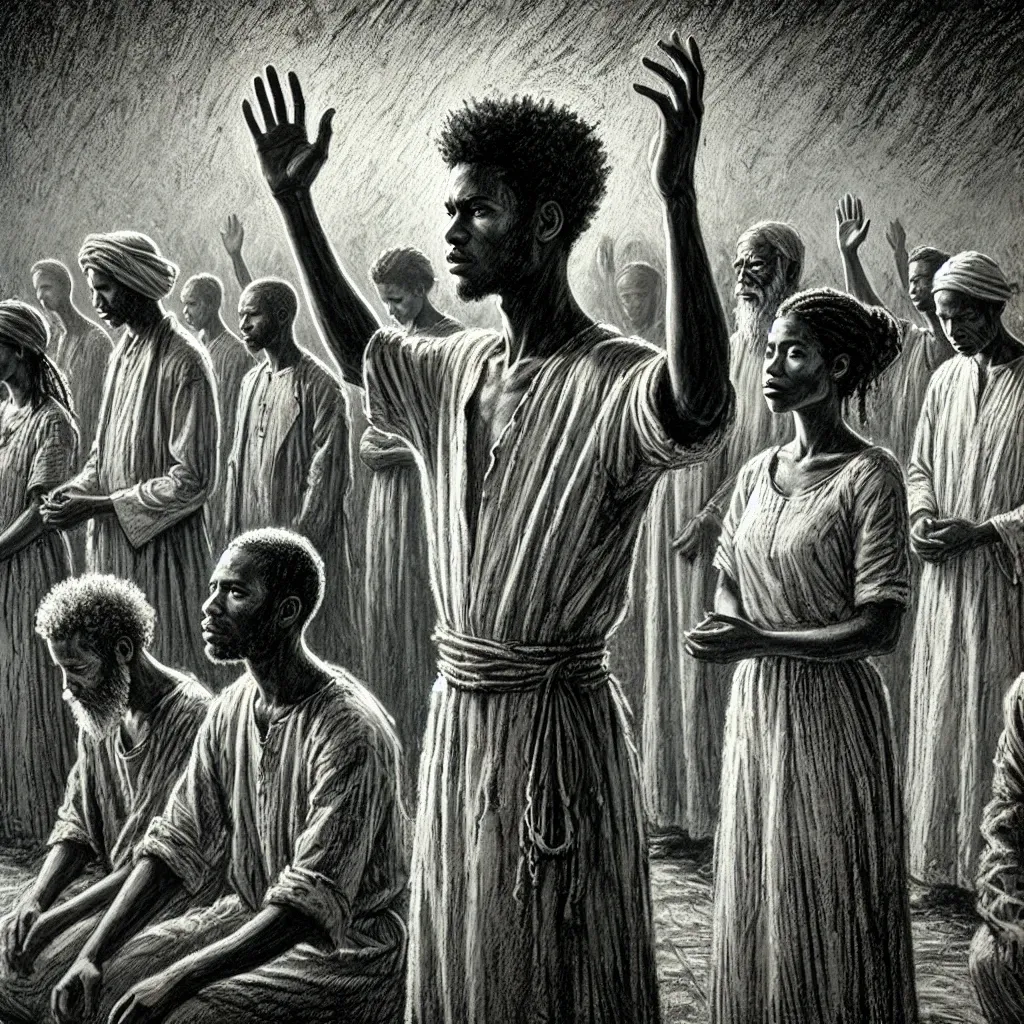
lying prostrate
reading or hearing the Word
solemn assembly
crying out to YAH
Nehemiah 9:1-3 (KJV)
“Now in the twenty and fourth day of this month the children of Israel were assembled with fasting, and with sackclothes, and earth upon them…
And they stood and confessed their sins… and one fourth part of the day they read in the book of the law… and another fourth part they confessed, and worshipped…”
This is a powerful passage because it shows that fasting was active spiritually. The people were not simply going hungry while carrying on casually. They were:
assembled
dressed in humility
confessing sins
reading the Law
worshipping
This helps us recover the true meaning of fasting. A biblical fast was not just abstinence. It was abstinence joined with focused spiritual activity.
The Difference Between True Fasting and Empty Fasting
One of the strongest teachings on fasting is found in Isaiah 58. This chapter is essential because it shows that not every fast is accepted by YAH.
Isaiah 58:3-7 (KJV)
“Wherefore have we fasted, say they, and thou seest not? …
Behold, in the day of your fast ye find pleasure, and exact all your labours.
Behold, ye fast for strife and debate…
Is not this the fast that I have chosen? to loose the bands of wickedness…”
This passage teaches that fasting becomes empty when:
the heart is unchanged
wickedness continues
oppression remains
selfishness rules
strife is preserved
So understanding how Israelites fasted must include this lesson: the external fast was never enough by itself. The true fast involved righteousness, mercy, justice, repentance, and sincere turning.
That means a person could technically abstain from food and still miss the point entirely.
Biblical fasting is accepted when the outer act and the inner condition agree.
(See our book, Prayer of a Hebrew Israelite)
Practical Lessons for Israelites Today
So what should Israelites today learn from these biblical patterns?
First, biblical fasting took different forms depending on the burden:
some fasts lasted until evening
some lasted a full day from even to even
some extended several days in crisis
some were extraordinary and prophetic
Second, fasting was always serious. It was not treated like a casual lifestyle accessory.
Third, fasting was usually joined to prayer, mourning, confession, or seeking YAH with intensity.
Fourth, fasting was connected to afflicting the soul. It was about humility, not outward show.
Fifth, fasting had purpose. Israelites did not fast randomly. They fasted because there was a reason:
sin
grief
danger
guidance
repentance
supplication
solemn observance
This gives us a practical framework. If Israelites today fast, they should aim to recover the biblical spirit:
humility
seriousness
prayer
repentance
spiritual focus
sincerity
Should Every Fast Be the Same Length?
Scripture clearly shows the answer is no. Not every fast was the same length.
Some lasted until evening.
Some lasted a full day.
Some lasted several days.
Some were extraordinary and much longer.
This means wisdom and context matter. The seriousness of the burden, the scriptural precedent, and the purpose of the fast all matter.
A person should not treat a short fast as meaningless, nor should they boast about long fasts. The point is not to compete in severity. The point is to humble the soul before YAH sincerely.
(See our book, Ancient Hebrew Prayer Principles: Keys To Getting Your Prayers Answered)
The Spiritual Principle Behind All Biblical Fasting
If we reduce all the examples to one unifying principle, it is this: Israelites fasted to bring themselves low before YAH in times when ordinary life could not continue as usual.
Fasting said:
this matter is serious
I need YAH
I am setting aside pleasure
I am denying the flesh
I am grieving, seeking, or repenting
I am afflicting my soul before the Most High
That is why fasting is powerful. It is not powerful because hunger itself is holy. It is powerful because it expresses humility, dependence, and focused seeking before YAH.
(See our book, Prayer of a Hebrew Israelite)
How Israelites Fasted in Scripture
When we look at the Scriptures honestly, we see that fasting among the Israelites was not shallow, trendy, or casual. It was a serious biblical practice tied to humility, repentance, prayer, mourning, and urgent seeking.
Israelites fasted:
from morning until evening
from even unto even
for full days
for multiple days in times of crisis
in moments of war, grief, danger, and repentance
They often fasted with:
prayer
sackcloth
ashes
confession
weeping
solemn assembly
reading the Word
And above all, they fasted to afflict the soul and humble themselves before YAH.
Ezra 8:21 (KJV)
“Then I proclaimed a fast there… that we might afflict ourselves before our ELOHIM…”
That single phrase captures the heart of biblical fasting. It was not about impressing men. It was about coming low before the Most High.
So for Israelites today, the lesson is clear: if we fast, let it be done with the same seriousness, sincerity, and scriptural purpose shown by our fathers. Let it not be empty ritual. Let it be a true humbling before YAH.
Shalom,
Keep In Touch
Explore the full Unknown Hebrew Collection for more scripture-based studies.
Stay updated with teachings — follow Unknown Hebrew on Substack.
Have questions? Contact Unknown Hebrew directly.