
Why Sackcloth Appears So Often in the Bible
When many people read the Scriptures, they notice that in times of fasting, mourning, repentance, distress, or national crisis, Israelites often put on sackcloth. To a modern reader, that can seem strange or unclear. Some may assume it was just an old custom with no deeper meaning. Others may wonder whether it was required every time someone fasted. Still others may ask whether sackcloth has any relevance for believers today.
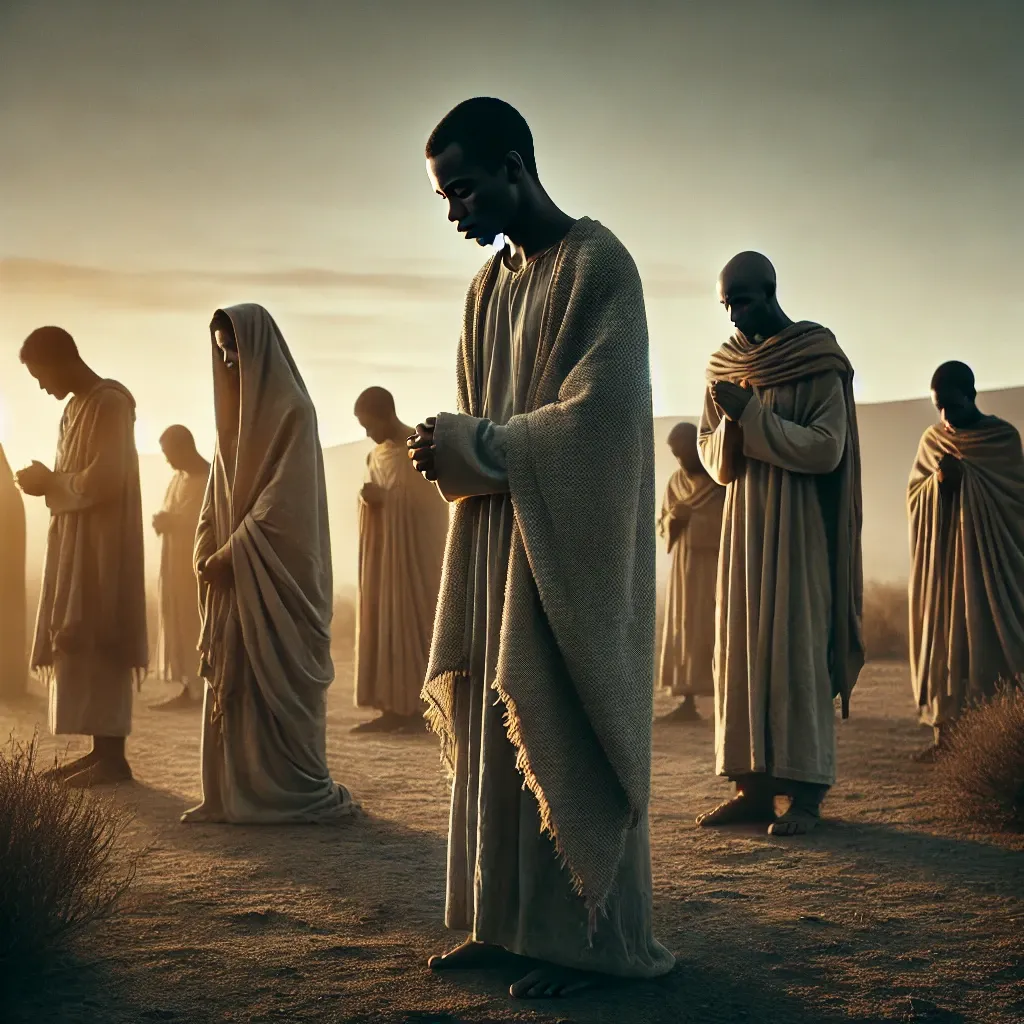
To understand sackcloth properly, we have to begin with this truth: in Scripture, sackcloth was not a fashion choice, and it was not worn for outward drama. It was a visible expression of an inward condition. It was a sign of humbling oneself, grieving, mourning, repenting, and afflicting the soul before YAH.
That is why sackcloth appears in moments of:
repentance
fasting
national calamity
mourning over sin
grief over judgment
cries for mercy
deep humility
The outward garment reflected an inward posture. In other words, the clothing matched the condition of the heart.
This matters because in Scripture, fasting was never supposed to be a hollow ritual. It was supposed to involve the whole person—body, mind, spirit, and heart. Sackcloth, ashes, weeping, lamentation, and abstinence often appeared together because they all expressed brokenness before the Most High.
So when the Scriptures speak of Israelites putting on sackcloth while fasting, they are showing us something very important: true fasting was often joined with humility, sorrow, and self-affliction.
(See our book, Baptism Unto Remembrance: Sin-Atonement-Repentance)
What Sackcloth Was in the Bible
Before we can understand the symbolism, we need to understand what sackcloth actually was.
Sackcloth was a coarse, rough garment, usually made from dark goat hair or another rough material. It was uncomfortable, plain, unattractive, and associated with grief and abasement. It was not something worn for comfort, status, or appearance. It was deliberately humbling.
This is important. The very nature of sackcloth tells us something about its purpose. It represented:
discomfort instead of comfort
humility instead of honor
grief instead of celebration
affliction instead of ease
When a person put on sackcloth, they were stepping away from ordinary comfort and outward dignity. They were showing that they were in a state of sorrow, repentance, or pleading.
We can see sackcloth used this way throughout the Scriptures.
Genesis 37:34 (KJV)
“And Jacob rent his clothes, and put sackcloth upon his loins, and mourned for his son many days.”
Here, Jacob wears sackcloth in mourning over Joseph. The garment expresses grief.
1 Kings 21:27 (KJV)
“And it came to pass, when Ahab heard those words, that he rent his clothes, and put sackcloth upon his flesh, and fasted, and lay in sackcloth, and went softly.”
Here sackcloth is connected with fasting, affliction, and humbling.
Nehemiah 9:1 (KJV)
“Now in the twenty and fourth day of this month the children of Israel were assembled with fasting, and with sackclothes, and earth upon them.”
Here sackcloth appears in a national act of repentance and solemn humility before YAH.
These examples show that sackcloth was not random. It was a recognized biblical sign of deep seriousness before the Most High.
(See our books, The Path: Of Righteousness)
Why Sackcloth Was Worn During Fasting
Fasting in Scripture is not merely “going without food.” Biblical fasting is about humbling oneself before YAH, afflicting the soul, seeking mercy, expressing sorrow, repenting, mourning, and setting oneself apart for serious spiritual purpose.
Sackcloth often accompanied fasting because it reinforced the same message that fasting itself communicated. Fasting says, “I am denying my flesh.” Sackcloth says, “I am humbling myself and casting aside comfort.”
Together they formed a visible and bodily expression of inward lowliness.
Psalm 35:13 (KJV)
“But as for me, when they were sick, my clothing was sackcloth: I humbled my soul with fasting…”
This verse is one of the clearest connections between sackcloth and fasting. Notice how David links them:
sackcloth on the body
fasting in the soul
humility before YAH
The phrase “I humbled my soul with fasting” is very important. Sackcloth was not the main point by itself. The main point was humility. Sackcloth was one way of expressing that humility outwardly.
This helps us understand the biblical mindset. When Israelites fasted in times of deep need, the goal was not to maintain normal comfort while merely skipping meals. The goal was to enter into a posture of affliction, seriousness, and brokenness before YAH.
That is why sackcloth appears so often alongside:
fasting
ashes
weeping
rent garments
lamentation
prayer
It signaled that the person or people were not approaching YAH casually.
Sackcloth as a Sign of Mourning
One of the main scriptural meanings of sackcloth is mourning. Sometimes that mourning was over personal loss. Sometimes it was over national destruction. Sometimes it was over sin and judgment.
We see this clearly in Jacob’s grief.
Genesis 37:34-35 (KJV)
“And Jacob rent his clothes, and put sackcloth upon his loins, and mourned for his son many days.
And all his sons and all his daughters rose up to comfort him; but he refused to be comforted…”
Jacob’s sackcloth expresses deep grief. It is the clothing of sorrow.
We also see it in national disaster.
Lamentations 2:10 (KJV)
“The elders of the daughter of Zion sit upon the ground, and keep silence: they have cast up dust upon their heads; they have girded themselves with sackcloth…”
Again, sackcloth is connected with devastation and lamentation.
This matters because fasting is not always about asking for something. Sometimes fasting is about mourning before YAH—mourning over sin, over judgment, over affliction, over loss, over the spiritual state of the people.
In that context, sackcloth becomes appropriate because it matches the season of grief. It is the opposite of festive clothing. It declares, “This is not a time of ease. This is a time of sorrow and lowliness.”
Sackcloth as a Sign of Repentance
Another major use of sackcloth is repentance. When people in Scripture realized that they were under judgment or had sinned greatly, they often responded with sackcloth and fasting.
One of the clearest examples is Ahab.
1 Kings 21:27-29 (KJV)
“And it came to pass, when Ahab heard those words, that he rent his clothes, and put sackcloth upon his flesh, and fasted…
Seest thou how Ahab humbleth himself before me? because he humbleth himself before me, I will not bring the evil in his days…”
This passage is very important because YAH Himself comments on the meaning of Ahab’s actions. He says, “Seest thou how Ahab humbleth himself before me?” That tells us exactly what sackcloth and fasting were communicating: humility before YAH in response to judgment.
The sackcloth itself did not save Ahab. But it was part of a visible humbling that YAH acknowledged.
We see a similar pattern in Nineveh after Jonah’s warning.
Jonah 3:5-8 (KJV)
“So the people of Nineveh believed YAHUAH, and proclaimed a fast, and put on sackcloth, from the greatest of them even to the least of them.
For word came unto the king of Nineveh, and he arose from his throne, and he laid his robe from him, and covered him with sackcloth, and sat in ashes…
But let man and beast be covered with sackcloth, and cry mightily unto ELOHIM…”
Though Nineveh was not Israel (though it had Israelites within the city), this example still clearly shows the biblical pattern. Sackcloth and fasting together expressed repentance, urgency, and a cry for mercy.
So when Israelites wore sackcloth while fasting, it often meant they were saying:
We are guilty
We are under pressure
We are seeking mercy
We are humbling ourselves
We are not approaching YAH proudly
Sackcloth and the Affliction of the Soul
To understand sackcloth more fully, we need to understand the biblical concept of afflicting the soul. Fasting is tied strongly to this idea.
Leviticus 16:29 (KJV)
“…ye shall afflict your souls…”
Isaiah 58:3 (KJV)
“Wherefore have we fasted, say they, and thou seest not? wherefore have we afflicted our soul, and thou takest no knowledge?”
Afflicting the soul means humbling oneself, denying the flesh, lowering oneself before YAH, and entering a posture of seriousness and repentance. Sackcloth fit naturally into that mindset because it removed outward comfort and dignity.
It was an embodied sign of inward affliction.
That is why we should not think of sackcloth as magical or mystical. Its power was not in the fabric itself. Its significance was that it matched the spiritual meaning of the fast. It was one more way to show:
I am not celebrating
I am not indulging
I am not exalting myself
I am lowering myself before YAH
In this sense, sackcloth served the same broader purpose as fasting: it helped embody humility.
(See our book, Baptism Unto Remembrance: Sin-Atonement-Repentance)
Sackcloth and Ashes: Why They Often Appear Together
In many passages, sackcloth and ashes are mentioned together.
Daniel 9:3 (KJV)
“And I set my face unto the ELOHIM YAHUAH, to seek by prayer and supplications, with fasting, and sackcloth, and ashes:”
Esther 4:1 (KJV)
“…Mordecai rent his clothes, and put on sackcloth with ashes…”
Ashes symbolize desolation, mortality, humiliation, and ruin. Sackcloth symbolizes mourning, abasement, and sorrow. Together, they create a vivid picture of complete lowliness.
This is especially important in times of national distress, repentance, or fear of judgment. The person is not merely praying with words. Their whole appearance is a testimony that they are in anguish, submission, and seriousness before YAH.
Daniel’s example is powerful because he was not performing for men. He was seeking YAH in prayer over the sins of his people and the desolation of Jerusalem.
Daniel 9:4-5 (KJV)
“And I prayed unto YAHUAH my ELOHIM, and made my confession…
We have sinned, and have committed iniquity…”
This shows us that sackcloth and ashes often accompanied intercession. The one praying identified deeply with the sin, affliction, and condition of the people.
Was Sackcloth Required Every Time Israelites Fasted?
This is an important practical question. The Scriptures show many occasions where fasting and sackcloth go together, but they do not teach that every fast required sackcloth in every circumstance.
There are different kinds of fasting in Scripture:
personal fasting
national fasting
emergency fasting
repentance fasting
mourning fasts
intercessory fasts
fasts during affliction or crisis
Sackcloth appears especially in moments of:
deep repentance
mourning
fear of judgment
national calamity
intense supplication
But not every mention of fasting includes sackcloth.
For example, Messiah fasted forty days in the wilderness, but the text does not mention sackcloth.
Matthew 4:2 (KJV)
“And when he had fasted forty days and forty nights, he was afterward an hungred.”
Likewise, some fasts are described simply by abstinence and prayer without reference to sackcloth.
So the scriptural pattern suggests:
sackcloth was a recognized biblical sign of humility and mourning
it was often used in solemn fasts
but the heart posture mattered more than the garment itself
That distinction is critical. The Scriptures never teach that rough clothing by itself is what moves YAH. The garment had meaning only when joined to sincerity.
(See our books, The Path: Of Righteousness)
The Danger of Empty Outward Signs
As with all biblical practices, outward signs can become empty if the heart is not right. This is one of the central lessons in Isaiah 58.
Isaiah 58:5 (KJV)
“Is it such a fast that I have chosen? a day for a man to afflict his soul? is it to bow down his head as a bulrush, and to spread sackcloth and ashes under him? wilt thou call this a fast…?”
This verse is very important because it shows that sackcloth and ashes alone were not enough. The people were performing outward signs, but their lives were not aligned with righteousness.
YAH rebukes them because they were:
fasting outwardly
but continuing oppression
continuing strife
continuing wickedness
So the lesson is clear: sackcloth is meaningful only when it reflects a true inward condition. Without repentance, humility, mercy, and obedience, the outward sign becomes hollow.
This is a crucial teaching point for us. It is possible to imitate biblical actions without carrying biblical substance. YAH is not impressed by costumes, displays, or performances. He looks for truth in the inward parts.
Joel 2:12-13 (KJV)
“Therefore also now, saith the ELOHIM, turn ye even to me with all your heart, and with fasting, and with weeping, and with mourning:
And rend your heart, and not your garments…”
This does not mean outward signs are forbidden. It means the heart must be primary. Rend your heart, not just your garment. In other words, do not stop at appearance. Let the outward act reflect an inward breaking.
(See our book, Baptism Unto Remembrance: Sin-Atonement-Repentance)
Practical Meaning for Israelites Today
So what does this mean for Israelites today? Are believers today required to literally wear sackcloth when they fast?
The safest biblical answer is this: Scripture shows sackcloth as a valid and meaningful sign of mourning, repentance, and humility, but it does not make it a universal command for every fast in every age and circumstance.
The deeper principle is what matters most:
humility before YAH
affliction of the soul
sincerity
repentance
seriousness
separation from comfort and self-exaltation
Modern believers may not always have literal sackcloth garments available, and Scripture does not require us to imitate ancient external forms in a fleshly or theatrical way. But the spirit behind sackcloth still matters deeply.
The question is not merely:
“Did I put on rough fabric?”
The real question is:
“Did I humble myself?”
“Did I afflict my soul?”
“Did I cast aside pride and comfort?”
“Did I approach YAH with sincerity, repentance, and fear?”
That said, if someone chooses to wear plain or rough garments during a solemn fast as a personal act of humility and scriptural remembrance, that is understandable—provided it is done sincerely and not for show.
The key is that the outward act should serve the inward truth, not replace it.
What Sackcloth Teaches Us About the Right Spirit of Fasting
Even if a person never literally wears sackcloth today, the biblical idea of sackcloth still teaches powerful lessons about how to fast properly.
1. Fasting Is Not About Comfort
Sackcloth reminds us that fasting is not supposed to be a polished religious performance that leaves the flesh untouched. It is about humbling the self.
2. Fasting Should Involve Seriousness
Sackcloth is not festive. It teaches that there are times to come before YAH in deep sobriety.
3. Fasting Should Be Joined to Repentance
Much of the biblical use of sackcloth is connected to repentance. That teaches us that fasting should often include self-examination and confession.
4. Fasting Should Not Be For Appearance
Because Isaiah 58 rebukes outward-only fasting, sackcloth teaches us that humility must be real, not staged.
5. Fasting Is About Lowering Ourselves Before YAH
Sackcloth stripped away honor, appearance, and comfort. It taught dependence, not pride.
Examples of Sackcloth in Scripture and What They Show
It may help to summarize some key biblical examples.
Jacob — Grief and Mourning
Genesis 37:34
Jacob wore sackcloth in sorrow over Joseph. This shows sackcloth as mourning.
David — Humility and Fasting
Psalm 35:13
David joined sackcloth with fasting and soul-humbling. This shows personal affliction and humility.
Ahab — Repentance Under Judgment
1 Kings 21:27-29
Ahab wore sackcloth and fasted after hearing judgment. This shows humbling in response to YAH’s word.
Mordecai — National Distress
Esther 4:1
Mordecai wore sackcloth when destruction threatened the people. This shows grief and urgent supplication.
Daniel — Intercession and Confession
Daniel 9:3
Daniel used fasting, sackcloth, and ashes in prayer for Israel. This shows deep repentance and intercession.
Nineveh — Urgent National Repentance
Jonah 3:5-8
The people put on sackcloth in a fast of repentance. This shows collective humility under warning.
Each example reinforces the same broad lesson: sackcloth was the clothing of lowliness in moments when the soul was being brought low before the Most High.
(See our book, Baptism Unto Remembrance: Sin-Atonement-Repentance)
The Greater Principle: Humility Before YAH
If we had to reduce the meaning of sackcloth to one central biblical principle, it would be this: humility before YAH.
Sackcloth was a visible rejection of pride, vanity, luxury, and self-exaltation. It was a declaration that the person was low before the Most High and deeply aware of need, sin, grief, or judgment.
That is why the principle still speaks to us.
James 4:9-10 (KJV)
“Be afflicted, and mourn, and weep…
Humble yourselves in the sight of the ELOHIM, and He shall lift you up.”
Though James does not mention sackcloth specifically, the spiritual principle is the same. There are times when the right response before YAH is not casual joy but affliction, mourning, and humility.
That is what sackcloth represented.
What Putting on Sackcloth Meant When Israelites Fasted
When the Scriptures speak of Israelites putting on sackcloth while fasting, they are describing more than an ancient custom. They are showing us the biblical spirit of true humility, mourning, repentance, and self-affliction before YAH.
Sackcloth meant:
“I am mourning”
“I am grieving”
“I am under pressure”
“I am humbling myself”
“I am seeking mercy”
“I am laying aside comfort”
“I am not approaching YAH lightly”
It often accompanied fasting because both pointed to the same inward reality: the soul being brought low before the Most High.
But Scripture also makes clear that the outward sign was never enough by itself. Sackcloth without repentance was empty. Fasting without righteousness was hollow. The true fast required the heart.
So for Israelites today, the lasting lesson of sackcloth is not merely about rough clothing. It is about the right posture before YAH:
humility instead of pride
repentance instead of stubbornness
brokenness instead of performance
sincerity instead of empty ritual
Joel 2:12-13 (KJV)
“Therefore also now, saith the ELOHIM, turn ye even to me with all your heart, and with fasting, and with weeping, and with mourning:
And rend your heart, and not your garments…”
That is the heart of the matter. The garment had meaning when the heart was broken. And that is still the lesson now
For deeper comfort, see our book Peace Be Still: John 14:27, which teaches how to rest in Yahushua’s peace during your fiery trials.
Shalom,
Keep In Touch
Explore the full Unknown Hebrew Collection for more scripture-based studies.
Stay updated with teachings — follow Unknown Hebrew on Substack.
Have questions? Contact Unknown Hebrew directly.